CN
CN EN
EN
 jp
jp  th
th 


Email
marketing@valueapex.com


Demo
What are you looking for?
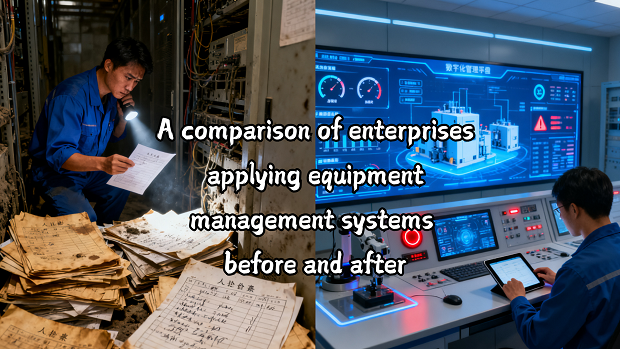
In the wave of digital transformation, the revolution in equipment management practices has become a key link for enterprises to enhance operational efficiency. There exists a fundamental difference between the traditional management model reliant on manual records, paperwork orders, and disparate Excel spreadsheets, and the modern equipment management system. This difference is not only at the tool level but also profoundly impacts management philosophy, operational efficiency, and core competitiveness. A comprehensive comparison before and after system application allows enterprises to recognize more clearly the immense value brought by digital management.
Before system application, enterprise equipment information management was often fragmented and siloed. Critical data like equipment files, maintenance records, and spare parts inventory were scattered across various departments, even in different individuals' notebooks, computers, and emails. This management mode led to difficult information retrieval; accessing a piece of equipment history could take hours or even days, with data being easily lost and hard to share. Decision-makers couldn't obtain accurate equipment status information promptly, managing as if moving through a fog, heavily reliant on the personal experience and intuitive judgment of veteran technicians. This experience-driven decision-making model struggled to answer key questions like "which equipment has the highest repair cost?" or "is the spare parts inventory reasonable?", keeping equipment management perpetually in a reactive state.
Regarding maintenance mode, under traditional management, enterprises mostly adopted a "fix-it-when-it-breaks" reactive response model. Preventive maintenance plans relied on human memory or calendar reminders, extremely prone to being postponed or forgotten due to busy production schedules, ultimately becoming mere formalities. This model kept maintenance teams constantly busy "firefighting," where minor equipment faults often escalated into major problems, causing prolonged unplanned downtime and significantly increasing repair costs and productivity losses. Repair processes were inefficient; the entire flow from reporting, approval, parts picking, repair, to recording depended on manual movement and paper-based transmission, resulting in high communication costs and severe internal friction.
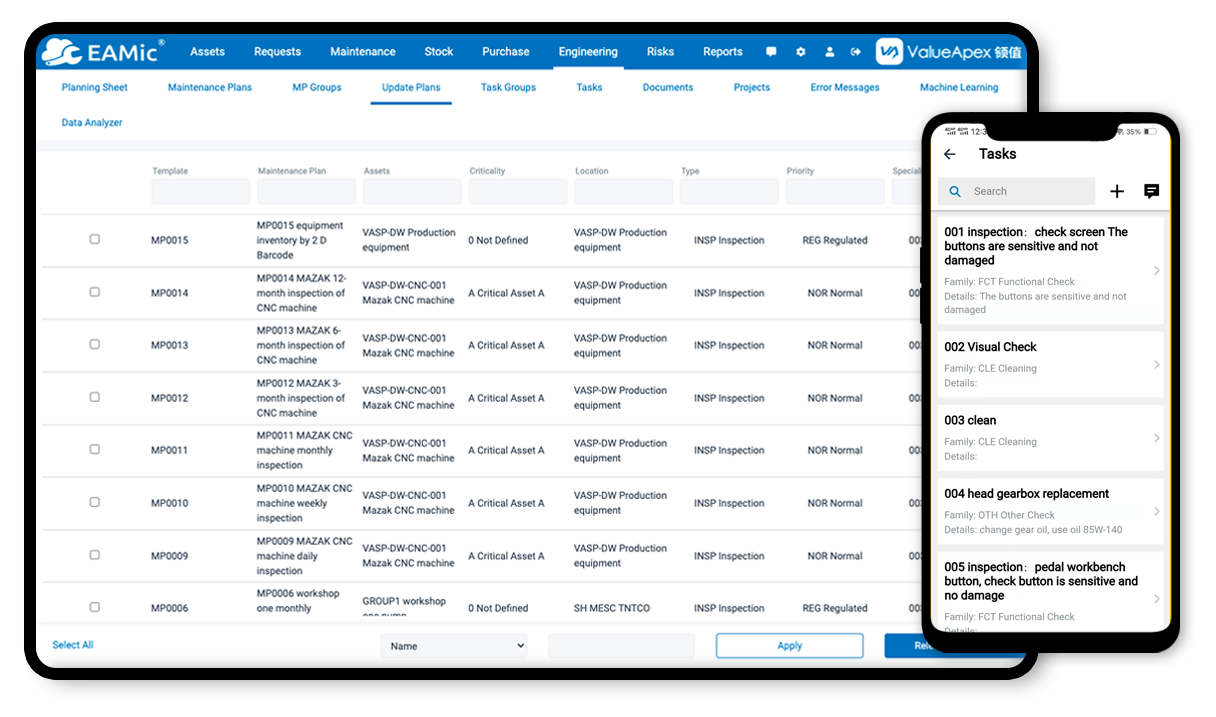
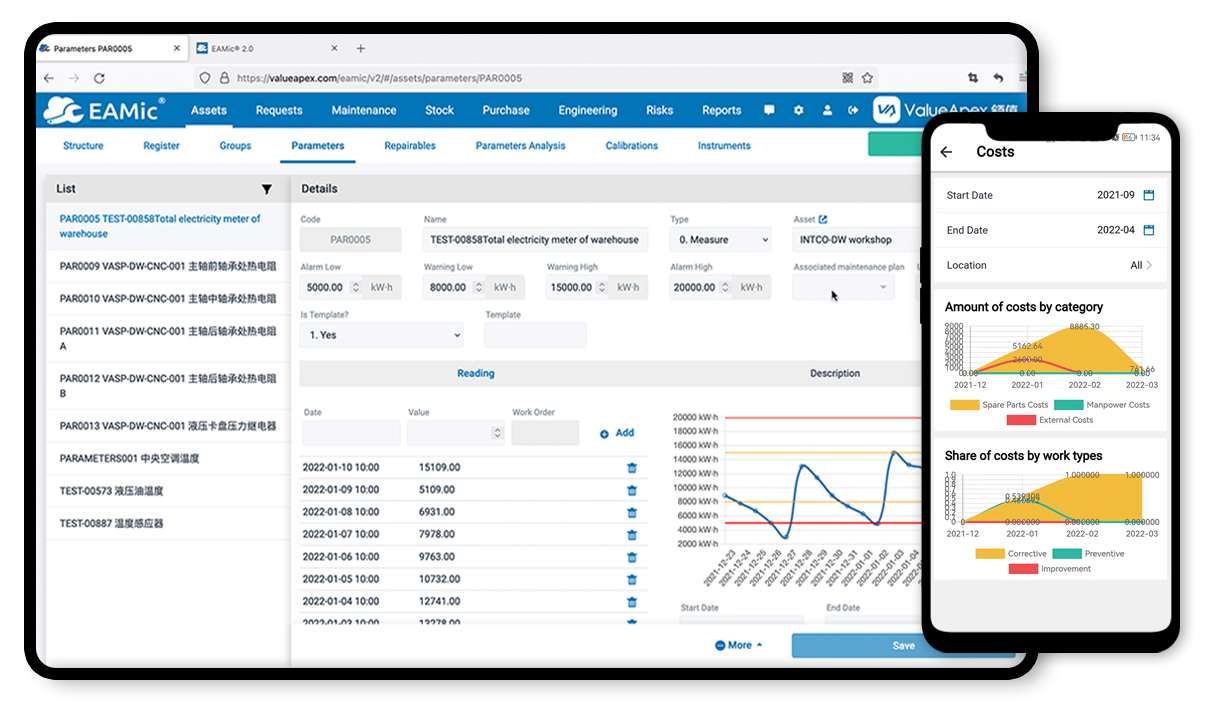
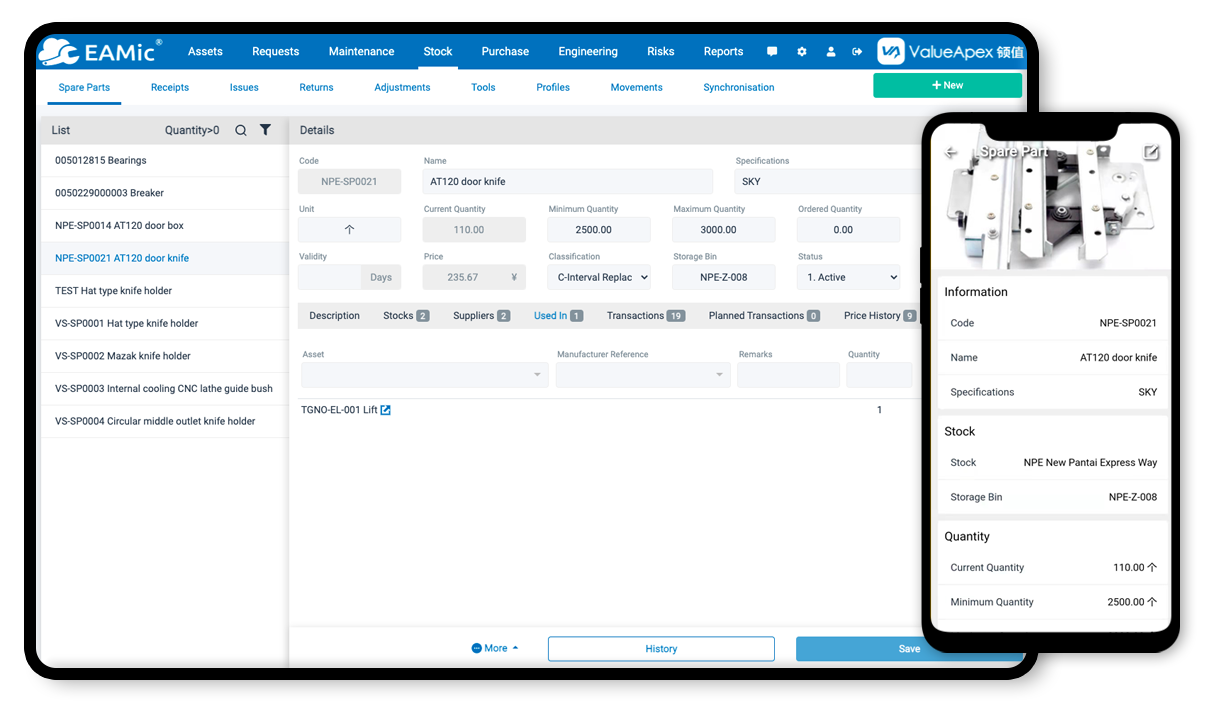
The introduction of an equipment management system fundamentally changed this situation. The system first achieved centralized and visual information management, building a unified equipment data platform for the enterprise. All equipment files, maintenance history, operating parameters, and inventory information are stored structured within the system, forming a complete equipment "electronic medical record." Authorized personnel can quickly retrieve and access information anytime, anywhere via computers or mobile devices, revolutionizing management transparency. This change in the data foundation provides solid support for management decisions, moving equipment management from chaos to order.
More importantly, the system drives a fundamental shift in the maintenance mode from reactive to proactive. Based on time or equipment running status, the system can automatically generate preventive maintenance work orders and push them to designated personnel, ensuring plans are strictly executed. This automated scheduling mechanism significantly increases the planned maintenance ratio, effectively reducing emergency failures. Furthermore, by integrating IoT sensors and AI algorithms, the system can evolve towards predictive maintenance. Through real-time analysis of equipment operational data, it provides early warnings for potential failures, allowing enterprises to schedule downtime repairs plannedly, minimizing losses from unplanned downtime. The most direct effect of this maintenance mode transformation is a significant improvement in equipment reliability and a substantial reduction in maintenance costs.
Regarding process efficiency, the system achieves a qualitative leap through mobility and automation. Field technicians can report issues via mobile phone QR codes, receive work orders, consult equipment documentation and repair history, and update job status in real-time. Work orders flow automatically through the system; electronic approval processes eliminate waiting times; QR code parts picking simplifies material requisition. This seamless process improves work order processing efficiency by over 30%, significantly shortens Mean Time to Repair (MTTR), and allows technicians to devote more time to higher-value maintenance activities rather than tedious administrative tasks.
The changes in knowledge management are equally remarkable. In the traditional mode, equipment maintenance knowledge resided in the minds of experienced technicians; staff turnover meant knowledge loss, and the company kept paying "tuition fees." The system, through its knowledge base function, transforms individual repair experience into organizational digital assets. Every fault handling solution and best practice is recorded and accumulated, forming a searchable organizational knowledge base. This not only prevents knowledge gaps but also provides strong support for the rapid growth of new employees, building a solid foundation for a learning organization.
In terms of safety and compliance, the system provides robust guarantees. By solidifying safe work procedures, managing work permits, and enforcing lockout-tagout (LOTO) safety protocols, the system turns safety rules from "relying on consciousness" to "enforcing execution." All safety-related activities are automatically recorded; compliance reports can be easily generated, enabling enterprises to confidently handle various audits and significantly reduce safety and environmental risks.
Ultimately, the value of the equipment management system is reflected in the optimization of team collaboration models. In traditional management, severe information barriers existed between maintenance, procurement, inventory, and finance departments, each operating in silos with conflicting goals. The system breaks down these departmental walls through data flow and workflow, enabling different departments to collaborate based on the same set of factual data, working together towards the goal of improving equipment reliability, and forming a synergistic and efficient management ecosystem.
In summary, the comparison before and after implementing an equipment management system reveals a comprehensive evolution from traditional to modern, from experience to data, from reactive to proactive, and from a cost center to a value center. Although system implementation requires initial investment and adaptation, the long-term benefits it brings—including reduced maintenance costs, improved equipment availability, optimized decision quality, and enhanced risk control capabilities—will build a sustainable competitive advantage for the enterprise. This investment is undoubtedly worthwhile and necessary. In the era of intelligent manufacturing, deploying a professional equipment management system is no longer a choice but a mandatory question concerning the future development of the enterprise.