CN
CN EN
EN
 jp
jp  th
th 


Email
marketing@valueapex.com


Demo
What are you looking for?
The successful implementation of an Equipment Management System (EAM/CMMS) begins with high-quality, complete data collection. This data collectively forms the "digital twin" of the equipment and is the foundation for all subsequent intelligent management, data analysis, and scientific decision-making. This article systematically outlines the various types of data an Equipment Management System needs to collect, providing a clear blueprint for enterprise data preparation.

Static data is the inherent, rarely changing information about equipment, forming the cornerstone of system operation.
Identity Information: Equipment code, equipment name, model, brand, supplier, manufacturer, serial number.
Financial Information: Purchase date, commissioning date, original value, depreciation period, residual value, cost center.
Technical Parameters: Key operating parameters like power, voltage, speed, pressure, capacity, as well as equipment capacity limits.
Location Information: Physical location, installation site, GPS coordinates.
Relationships: Parent equipment/system, associated spare parts list.
Technical Documentation: Equipment user manuals, maintenance manuals, circuit diagrams, hydraulic diagrams, P&IDs.
Certification Documents: Special equipment registration certificate, annual inspection reports, safety permits, certificates of conformity.
Standard Documents: Operating procedures, lubrication standards, inspection standards, maintenance standards.

Dynamic data records the activities and status changes of equipment throughout its lifecycle, and is core to analysis and optimization.
Status Parameters: Real-time data automatically collected via IoT sensors, such as temperature, vibration, pressure, flow rate, current, energy consumption.
Operational Records: Start/stop times, runtime, production output, downtime records.
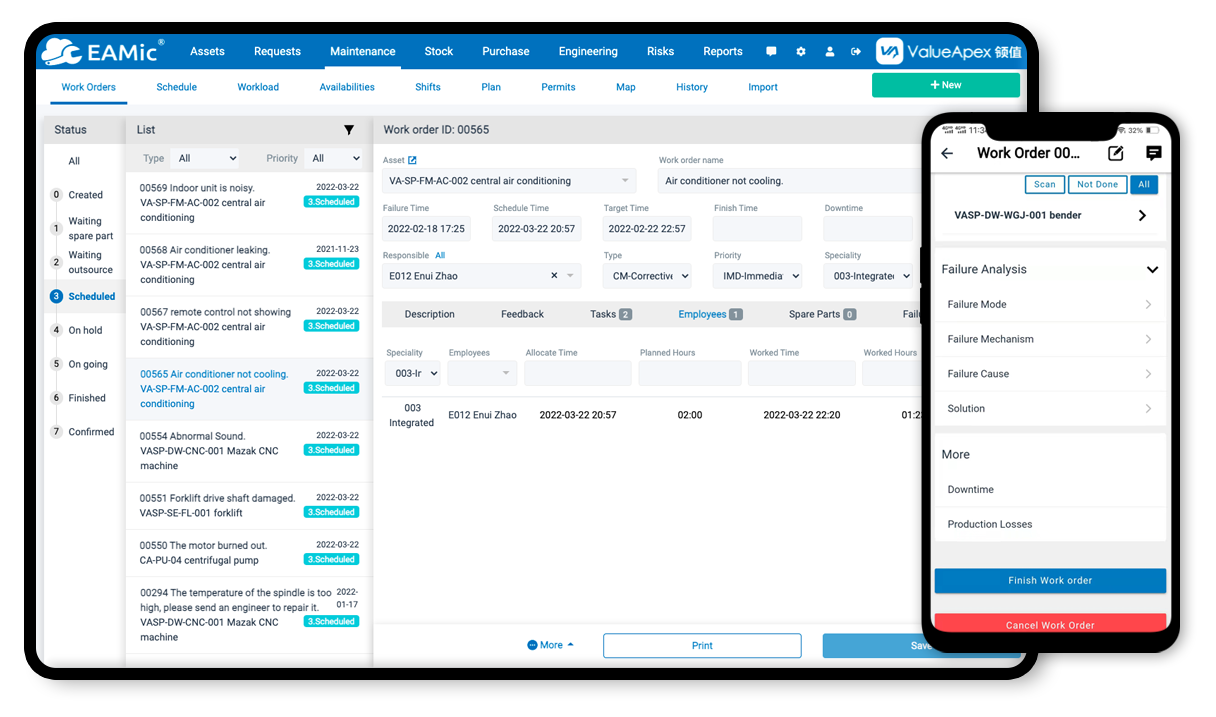
Work Order Data: Complete records of all repairs, inspection, and maintenance work orders, including failure phenomena, request time, acceptance time, maintenance personnel, labor hours, spare parts consumed, repair actions, and acceptance results.
Failure Data: Standardized failure codes, downtime, impact scope.
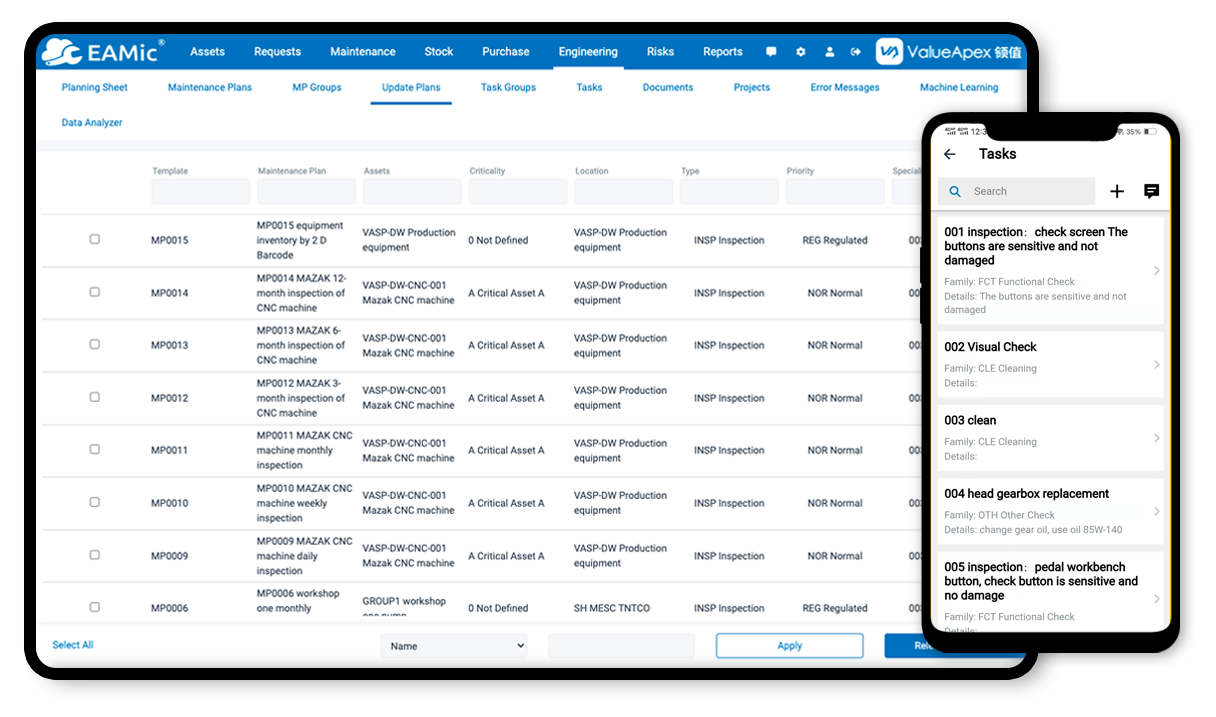
Inspection Data: Measured values, standard values, judgment results, and abnormalities found during each inspection.
Maintenance Data: Maintenance execution records, replaced consumables, equipment status comparison before and after maintenance.
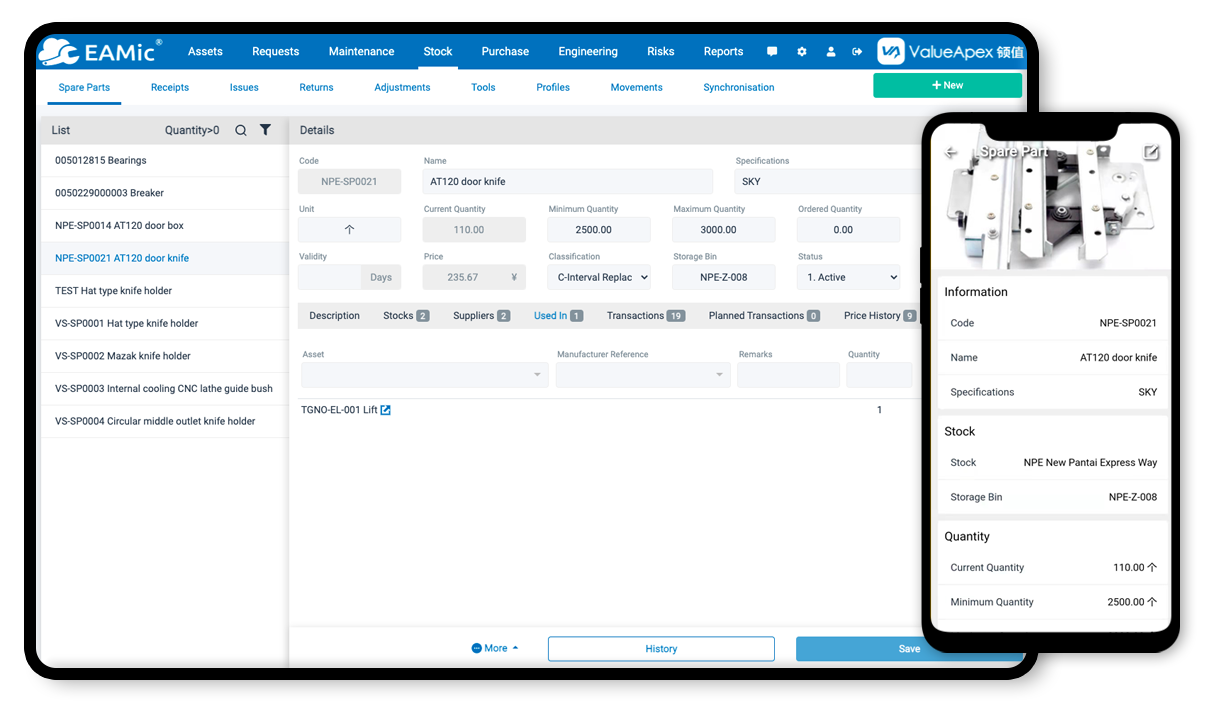
Inventory Information: Spare part code, name, specification, stock quantity, safety stock, storage location, supplier information.
Logistics Information: Spare parts receiving, issuing, transferring records, purchase orders, requisition slips.

Personnel Information: Basic information of maintenance team members, skill qualifications, training records, contact details.
Organizational Structure: Departments, teams, responsibility divisions.
Supplier Files: Supplier name, contact information, supply scope, historical performance.
Outsourced Service Records: Outsourced maintenance contracts, service content, service provider evaluation.
Phased Implementation, Prioritize Critical Assets: Prioritize collecting data for critical assets that significantly impact production, then gradually cover the entire plant.
Standardization & Codification: Establish unified coding rules to ensure data consistency and analyzability.
Leverage Technical Means: Use tools like barcode scanners, RFID, and IoT sensors to reduce manual entry, improving data accuracy and efficiency.
Define Responsibility: Data collection is not solely the IT department's task; it requires collaboration from equipment, maintenance, procurement, finance, and other departments, with clear responsible persons and maintenance cycles for various data types.

The data to be collected for an Equipment Management System is a multidimensional information set covering static and dynamic, physical and process aspects. The initial data investment may seem tedious, but it is key to whether the system can truly exhibit "intelligence." Complete and accurate data is the fuel that drives preventive maintenance, optimizes spare parts inventory, enables reliability analysis, and calculates the Total Cost of Ownership, laying a solid foundation for the enterprise's transition from reactive operations to intelligent operations.