CN
CN EN
EN
 jp
jp  th
th 

Email
marketing@valueapex.com


Demo
What are you looking for?
In the wave of digital transformation, the management methods of equipment assets are undergoing a revolutionary change. Professional Equipment Management Systems (EMS) are no longer optional but have become a strategic necessity for enterprises to enhance core competitiveness and achieve sustainable development. Their application value extends far beyond the traditional "maintenance record" tool, permeating all aspects of enterprise operations.
1. Reduce Maintenance Costs: By shifting from reactive repair to preventive and predictive maintenance, the system can effectively reduce emergency breakdowns by up to 20%, thereby significantly lowering high emergency repair costs, spare parts costs, and production losses due to downtime.
2. Improve Overall Equipment Effectiveness (OEE): The system is a direct tool for improving OEE. It comprehensively boosts this key metric by reducing downtime, optimizing operating parameters, and minimizing waste caused by process deviations.
3. Extend Equipment Lifecycle: Standardized maintenance plans ensure equipment always operates in optimal condition, delaying asset aging and depreciation, postponing capital expenditures, and improving return on investment.
1. Achieve Full Lifecycle Management: From asset life cycle management selection and procurement, installation and commissioning, operation and maintenance, to retirement, the system realizes a digital twin of the asset's entire lifecycle. The complete "electronic medical record" for each piece of equipment makes costs accountable, performance evaluable, and responsibilities traceable.
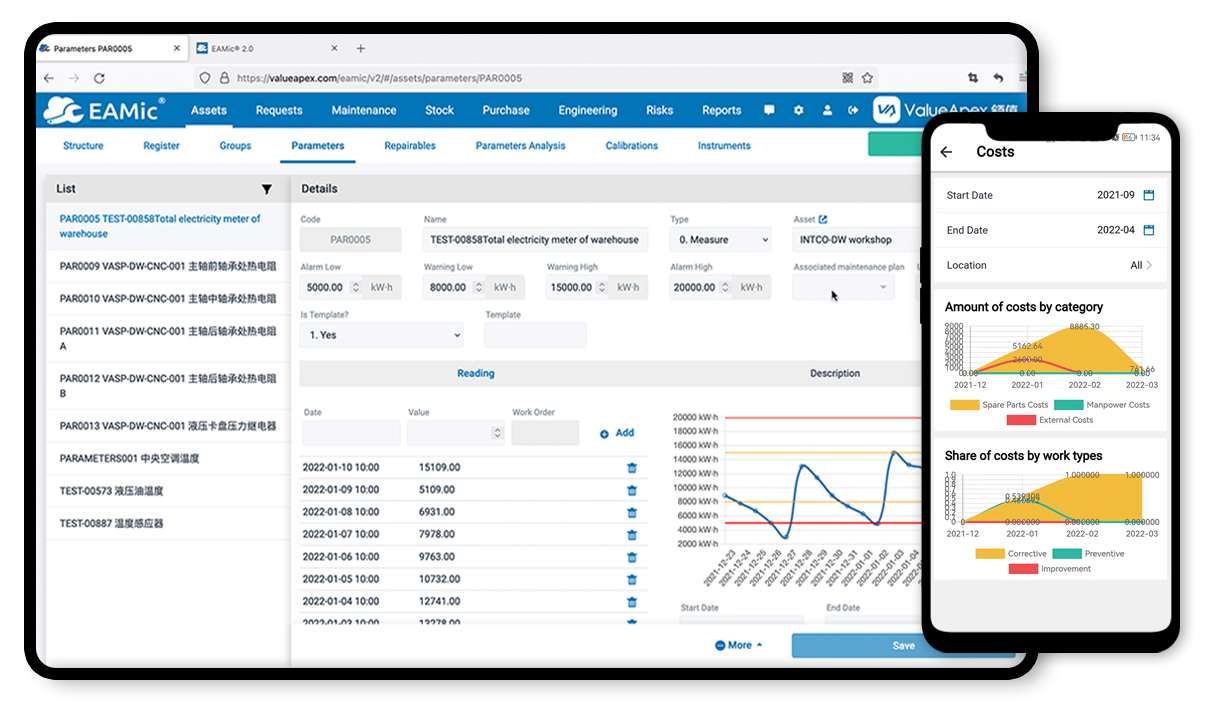
2. Drive Scientific Decision-Making: The system automatically aggregates massive operational data and presents it through visual dashboards and in-depth reports. Managers can shift from "experience-driven" to "data-driven," making more scientific decisions regarding budgets, procurement, and technical renovations based on facts.
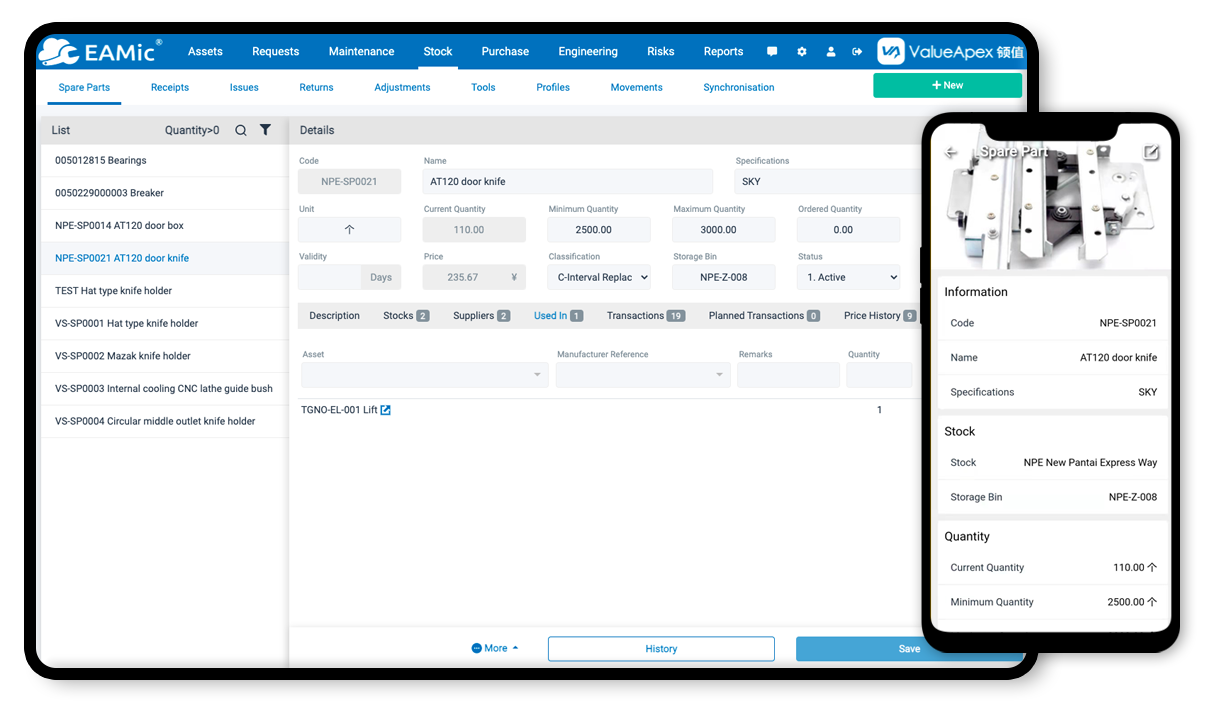
3. Optimize Spare Parts Inventory: Through accurate demand forecasting and inventory strategies, the system can ensure the availability of critical spare parts while minimizing unnecessary inventory stockpiles and capital occupation, typically reducing inventory costs by 10%-25%.
1. Ensure Safety and Compliance: The system enforces safety procedures, manages work permits, and records all safety-related activities, easily generating compliance reports to handle audits and significantly reducing safety and environmental risks.
2. Retain Organizational Knowledge: The system transforms the personal experience of veteran technicians into permanent digital assets for the enterprise. Every fault handling incident, every best practice are recorded and formed into a searchable knowledge base, avoiding knowledge loss due to staff turnover and accelerating the growth of new employees.
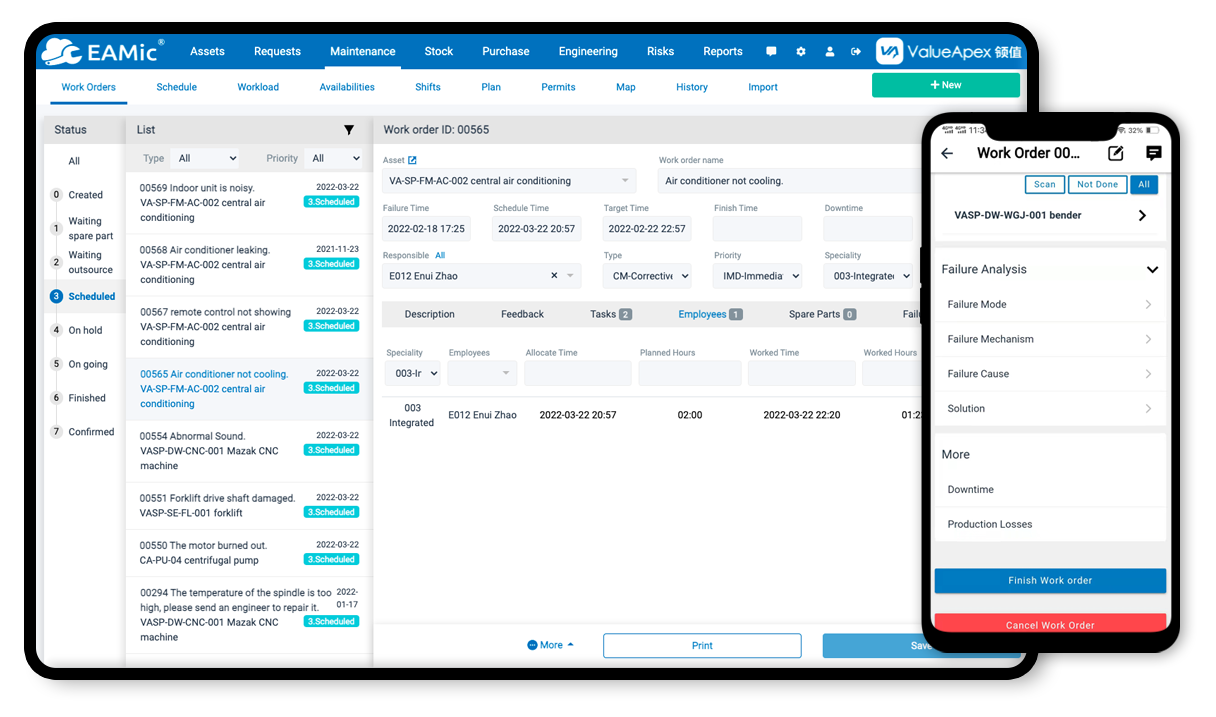
3. Enhance Team Collaboration and Efficiency: Through mobility and process automation, departmental barriers are broken down. Automatic work order routing, mobile order receiving, scanning codes to pick parts, and other operations greatly enhance cross-departmental collaboration efficiency and frontline technician job satisfaction.
The application value of an Equipment Management System lies essentially in its ability to transform equipment management from a passive, costly logistical support activity into an active, value-creating strategic function. It is not only a tool for managing equipment but also a core engine for enterprises to optimize operations, reduce risks, improve decision-making quality, and build sustainable competitive advantages. Investing in an advanced Equipment Management System is an investment in the enterprise's stable operation and profitability for years to come.