CN
CN EN
EN
 jp
jp  th
th 


Email
marketing@valueapex.com


Demo
What are you looking for?
On the evolutionary path of equipment management, manual methods and specialized equipment management software represent two distinctly different eras. Although some companies still use the old ways, the gap between the two has formed a significant chasm. A detailed comparison across multiple dimensions reveals that software management is an irreversible trend.
Manual Management: Information is scattered across departments, even in different individuals' notebooks, Excel files, and email inboxes. Equipment files, repair records, and spare parts lists are isolated, creating "information silos." Finding a historical repair record might require searching through piles of paper, is highly inefficient, and records are easily lost.
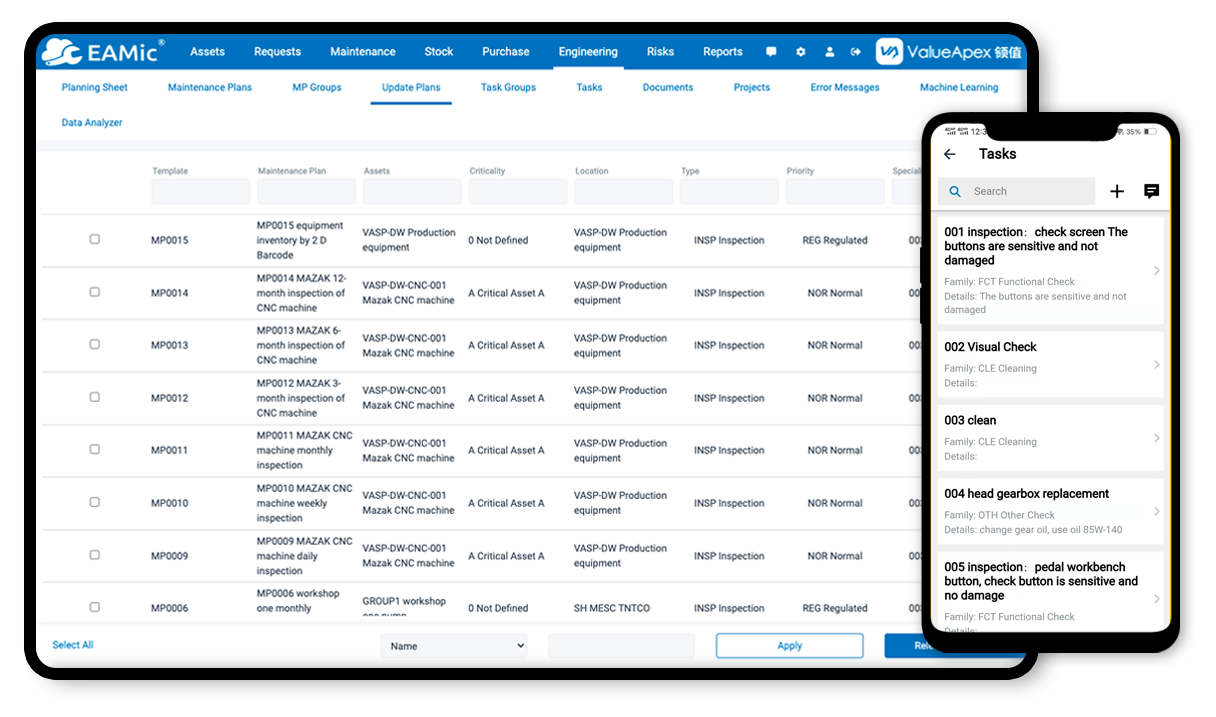
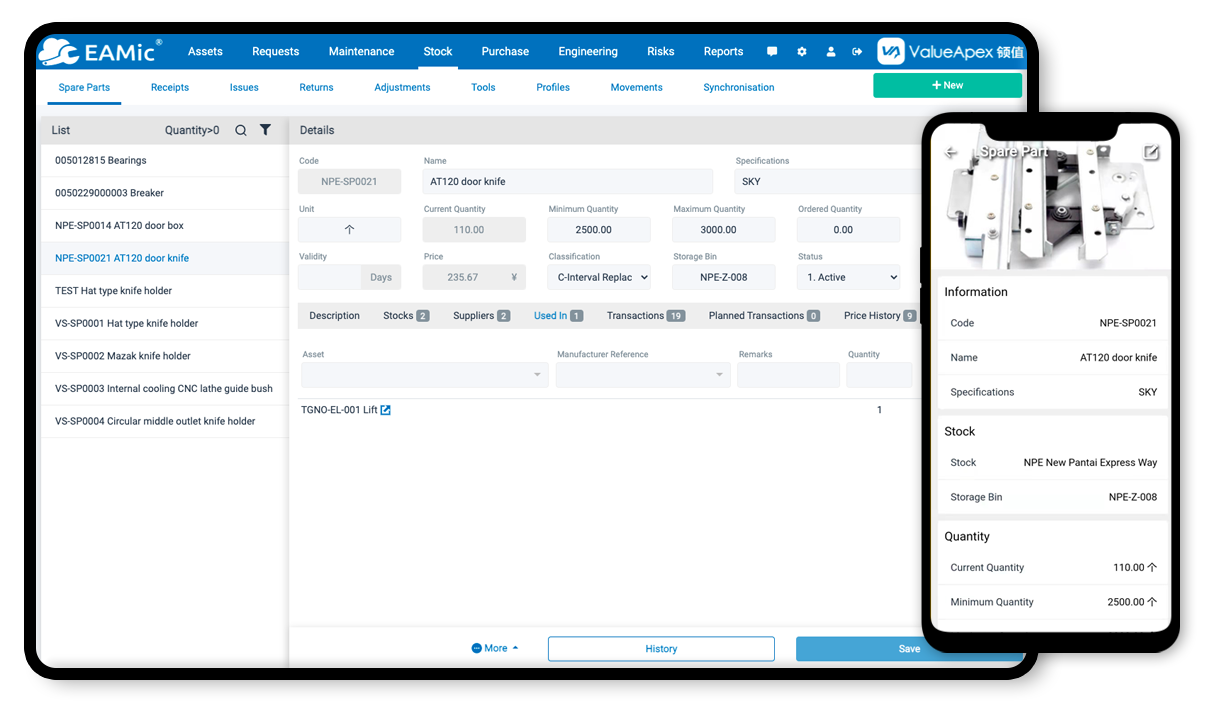
Software Management: Establishes a unified, centralized database for equipment information. All data is stored structurally on a single platform, accessible for quick search and retrieval by authorized personnel anytime, anywhere. Each piece of equipment has a complete, readily traceable "electronic medical record."
Manual Management: Maintenance work largely relies on a "fix-it-when-it-breaks" reactive model. Preventive maintenance plans depend on memory or calendar reminders, are easily forgotten or postponed due to production pressures, often becoming mere formalities. This leads to minor equipment issues escalating into major failures.
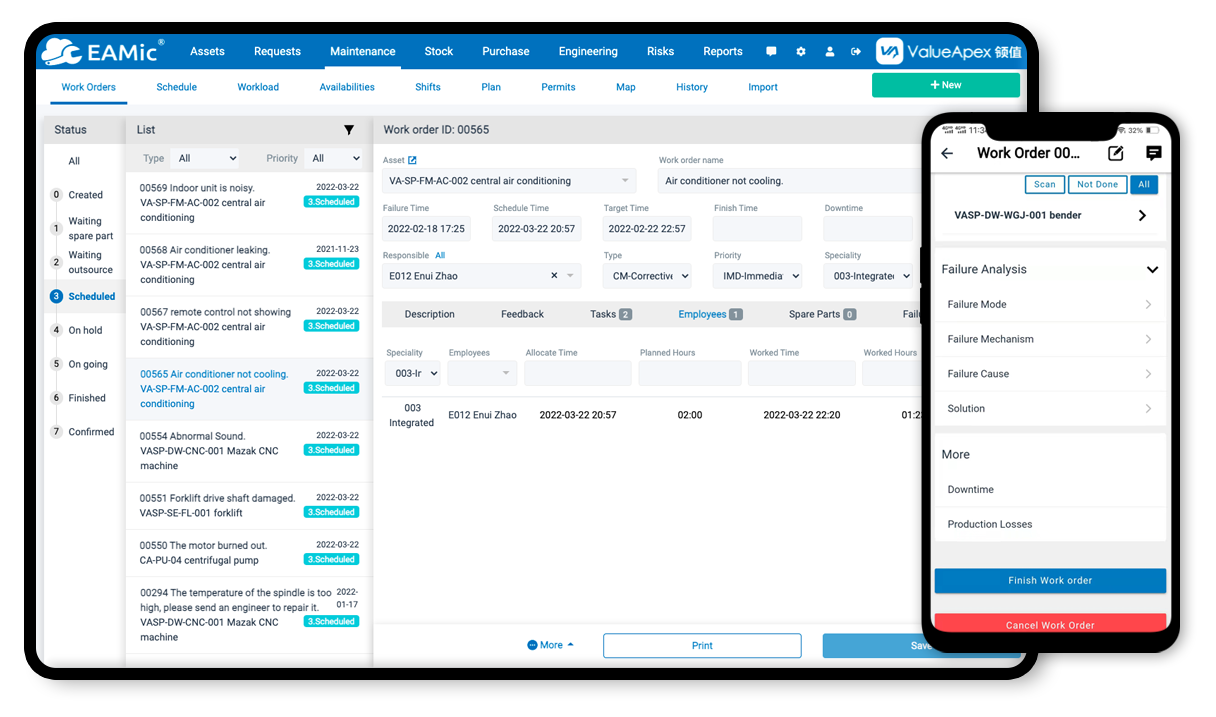
Software Management: The system automatically generates preventive maintenance work orders based on preset rules and pushes them to responsible personnel, eliminating the risk of human forgetfulness. It enforces the execution of maintenance plans, fundamentally shifting the management model to "proactive prevention," thereby reducing unexpected breakdowns.
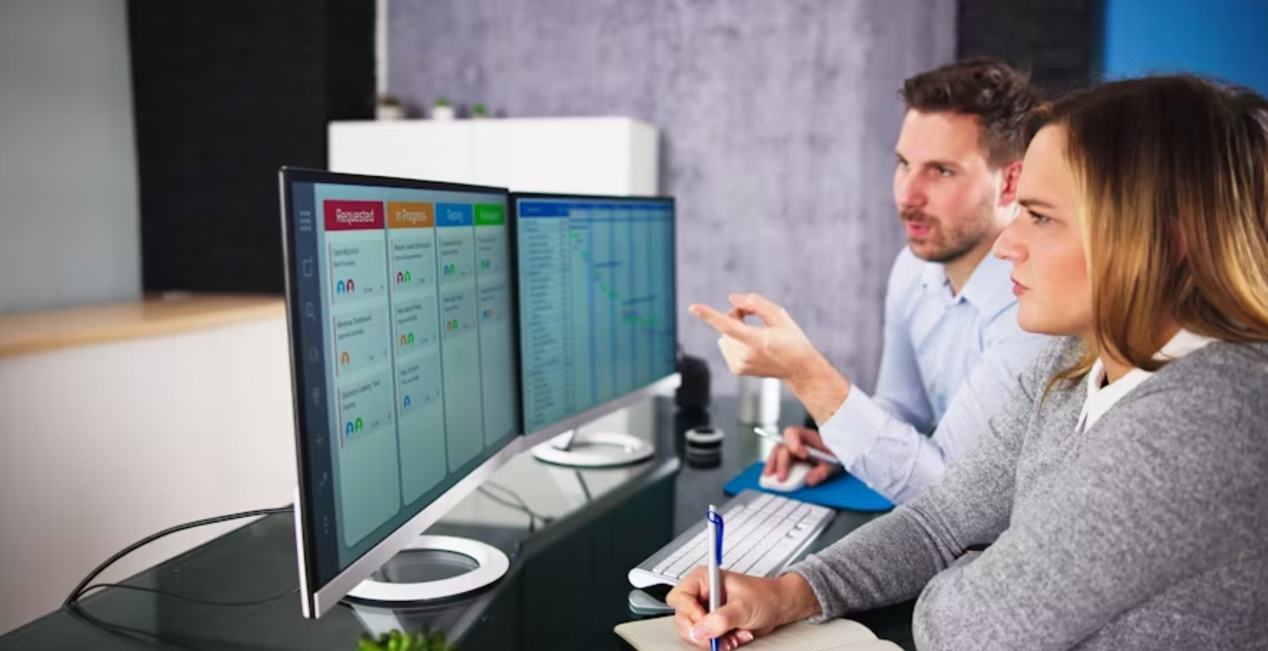
Manual Management: Decisions are mostly based on the personal experience and intuition of seasoned technicians. Lacking data support, it's impossible to accurately answer key questions like "Which machine fails most often?", "What has the highest repair cost?", or "Is our spare parts inventory rational?" Management operates in a "black box."
Software Management: The system collects all operational data and presents it through visual reports and dashboards. Managers can gain insights into root causes, assess performance, and predict trends based on accurate, real-time data, enabling scientific and optimized decision-making.
Manual Management: Processes are cumbersome. Reporting a breakdown might require phone calls or visiting the site; approvals need physical signatures; picking parts involves manually filling out forms; repair records are logged afterwards. The entire process is time-consuming with high communication costs.
Software Management: Processes are digitized and automated. Report issues by scanning a code with a phone; work orders flow automatically; approvals are electronic; tasks are accepted via mobile devices; parts are picked by scanning codes. Information updates in real-time, departments collaborate efficiently, processes are transparent, significantly reducing downtime waiting and boosting overall efficiency.
Manual Management: The company's maintenance knowledge and management experience reside in employees' minds. When key staff leave, valuable experience and skills are lost, putting the company at risk of a "knowledge gap."
Software Management: The symptom, cause, solution, and parts used for every repair are clearly recorded, forming a searchable knowledge base. New employees can learn quickly, and corporate knowledge is effectively retained and transferred, no longer dependent on individuals.
Manual Management: The total lifecycle cost of equipment is scattered and difficult to calculate, making cost control challenging. Compliance checks require last-minute preparation of numerous documents, which is labor-intensive and prone to errors.
Software Management: All equipment-related costs and labor hours are accurately recorded, allowing easy calculation of the Total Cost of Ownership per asset. The system automatically reminds of compliance check dates and generates standard format compliance reports, simplifying audit preparation.
The difference between manual and software management is essentially a dialogue between "agricultural civilization" and "industrial civilization." The apparent cost of manual management seems low, but the hidden costs it incurs are enormous. Equipment management software is a one-time investment with long-term returns. The efficiency gains, cost savings, risk reduction, and value creation it brings far exceed its own cost. For any enterprise aiming to survive and thrive in modern competition, moving away from manual methods and embracing digital software is not a multiple-choice question, but a mandatory one.