CN
CN EN
EN
 jp
jp  th
th 


Email
marketing@valueapex.com


Demo
What are you looking for?
Enterprise Asset Management (EAM) system is the core software platform for asset-intensive industries such as manufacturing, energy, and transportation to achieve refined and intelligent management of equipment and facilities. It is far more than a simple maintenance recording tool; it is a strategic management system that runs through the entire lifecycle of assets "from birth to death," with the core objectives of enhancing reliability, optimizing costs, and ensuring safety.
In simple terms, an EAM system primarily accomplishes three major tasks: managing asset information, optimizing maintenance activities, and driving intelligent decision-making.
1. Establishing a Unique "Digital Identity" and Comprehensive Profile for Assets
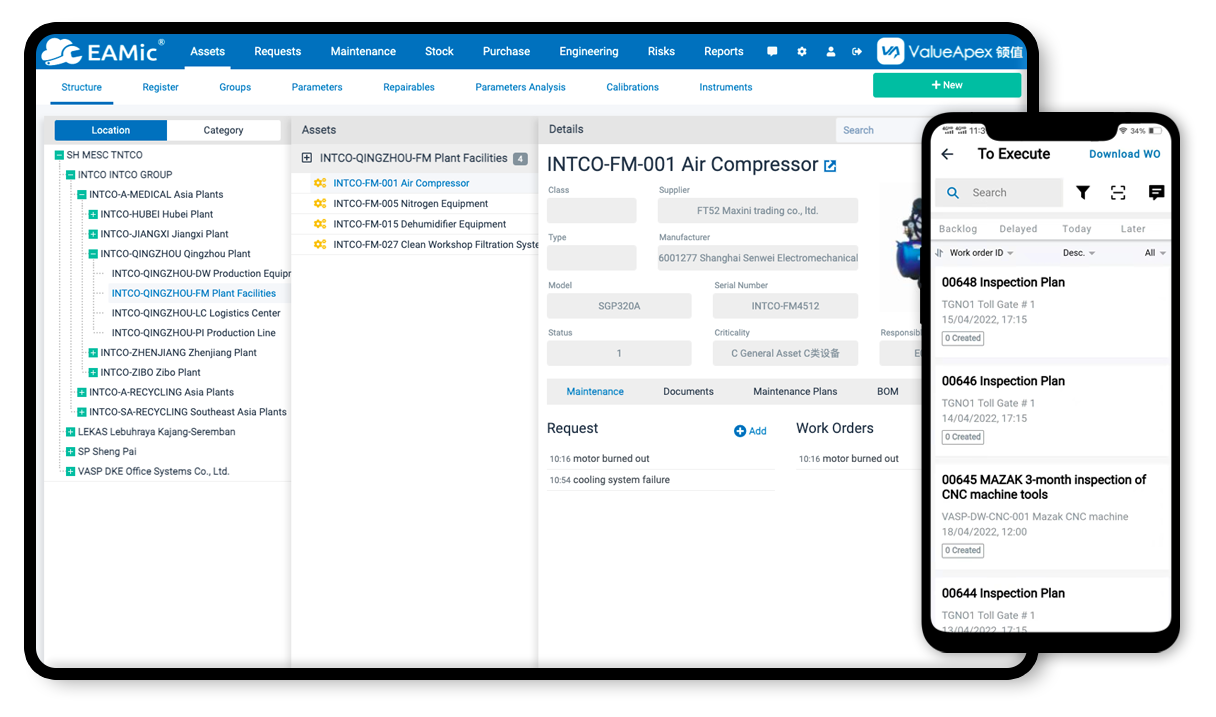
This is the foundation of an EAM system. It creates a unique digital identity for each piece of equipment, facility, or asset within the enterprise and centrally stores all information from procurement, installation, operation, changes, to disposal, forming a complete "digital twin" profile. This includes technical parameters, supplier information, location, associated technical documents, and all historical maintenance records. This addresses the fundamental issues of scattered asset information and discrepancies between records and physical assets, achieving comprehensive visual management of assets.
2. Driving Efficient and Standardized Maintenance and Repair Workflows
This is the execution core of an EAM system. Through a work order system, it translates various maintenance strategies into specific, trackable actions.
Planned Maintenance: Automatically triggers preventive maintenance and regular inspection tasks based on time or equipment operating hours, preventing issues before they occur.
Responsive Repair: Supports rapid reporting of faults, work order dispatching, repair execution, and closed-loop record-keeping when unexpected failures occur, minimizing downtime.
Predictive Maintenance Support: Integrates with Internet of Things (IoT) data to analyze equipment condition trends, providing early warnings and generating maintenance work orders before failures occur.
3. Achieving Visualization and Optimization of Asset Performance and Costs
This is the "brain" of an EAM system. By collecting and analyzing data throughout the entire lifecycle, it elevates asset management from "experience-driven" to "data-driven."
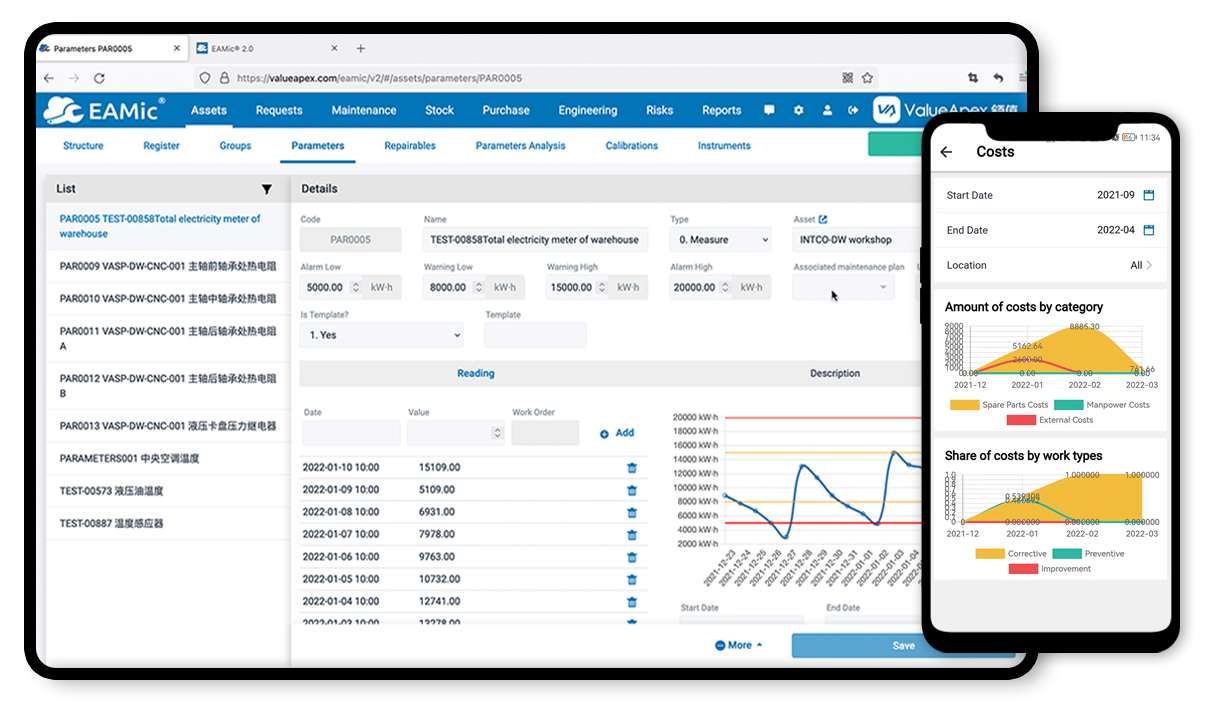
Accurate Cost Accounting: Automatically aggregates procurement costs, maintenance costs, energy consumption costs, and depreciation related to equipment, precisely calculating the total lifecycle cost of assets.
Quantified Performance Analysis: Automatically calculates key performance indicators such as Overall Equipment Effectiveness (OEE), Mean Time Between Failures (MTBF), and the proportion of planned maintenance, accurately identifying management bottlenecks.
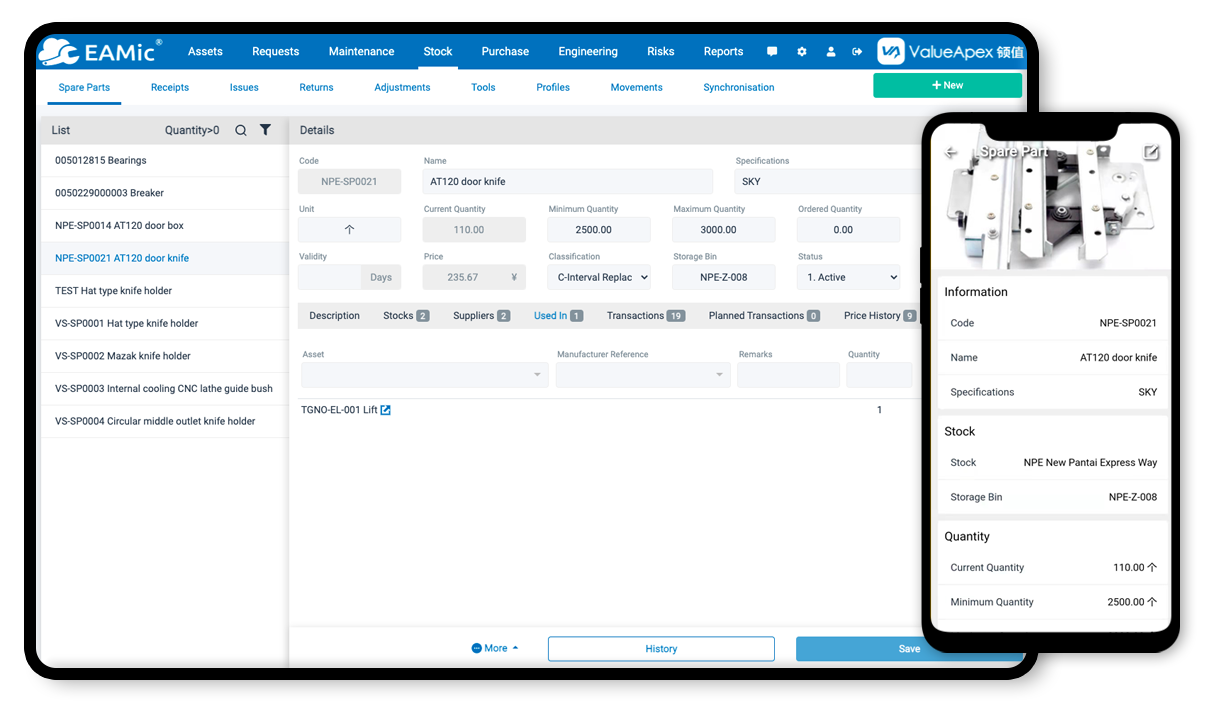
Intelligent Inventory Optimization: Manages spare parts and consumables, synchronizing inventory with maintenance plans to reduce capital occupation while ensuring supply availability.
In summary, a mature EAM system acts as the "digital hub for equipment" within an enterprise. By fully digitizing physical assets and their management processes, it helps enterprises achieve three core values: ensuring production continuity, controlling operational costs, and supporting scientific decision-making. Ultimately, it transforms equipment assets from a passive "cost center" into an active "value center" that supports the enterprise's safe, efficient, and sustainable development.