CN
CN EN
EN
 jp
jp  th
th 


Email
marketing@valueapex.com


Demo
What are you looking for?
A complete equipment operations system is a complex, integrated platform composed of multiple collaborative functional modules covering all aspects of equipment operations and maintenance. Understanding these modules helps enterprises ensure comprehensive functional coverage during system selection and implementation.
1. Equipment Asset Register Management: This is the "cornerstone" of the system. It creates a complete electronic record for all enterprise equipment and facilities, including asset ID, name, model/specifications, supplier, purchase date, original value, installation location, technical parameters, drawing/document attachments, etc. It enables standardized, centralized, and traceable management of asset information.
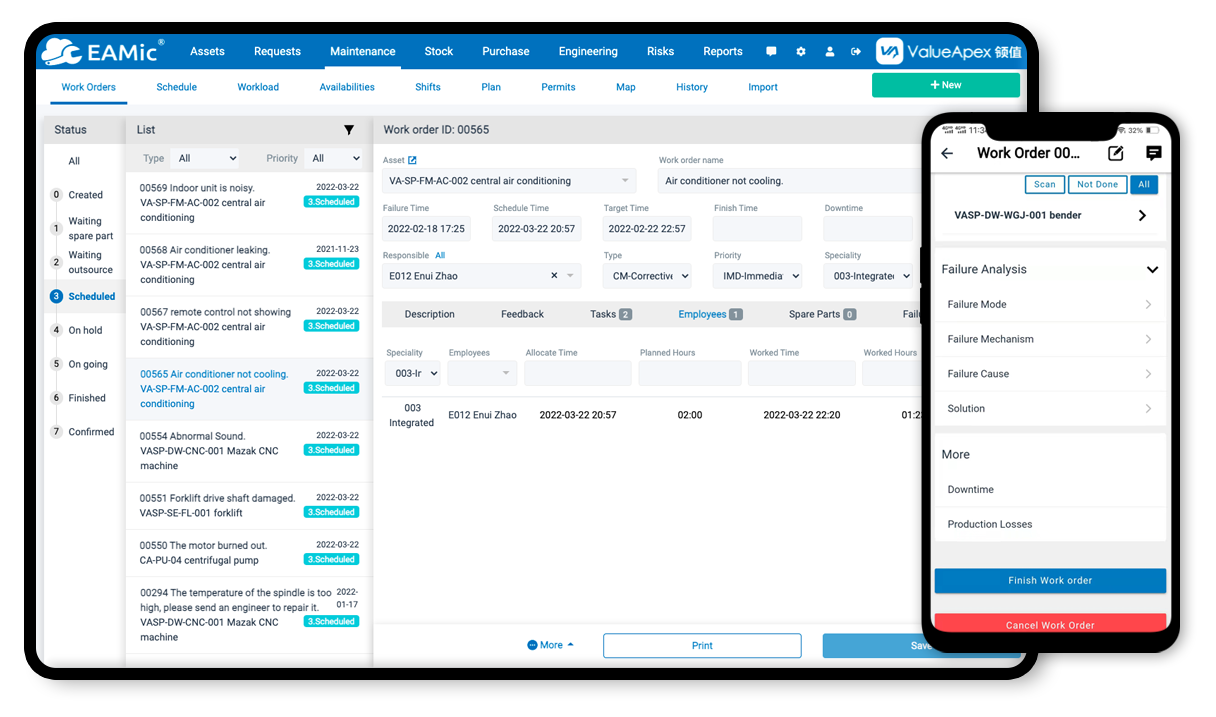
2. Work Order Management: This is the "heart" of the system. All maintenance activities are driven and recorded through work orders. Functions include: work order creation, assignment, scheduling, execution, closure, and feedback; tracking work order status; recording labor, materials, fault codes, downtime, and other cost and efficiency data.
.png "functional-modules-of-an-equipment-01(1).png")
3. Preventive Maintenance Management: Automatically generates periodic maintenance, inspection, and calibration work orders based on time, running mileage, or meter readings. Allows setting maintenance plan templates to ensure the planning and standardization of maintenance work, serving as the primary means to avoid unexpected failures.
4. Planned Repair Management: For large, complex shutdown overhaul projects, it supports project management. Enables task breakdown, resource allocation, progress tracking, and budget control, ensuring major repairs are completed on time, to quality standards, and within budget.
5. Mobile Operations: Supports field engineers via a mobile APP. Engineers can receive work orders, view equipment history, scan codes to identify equipment, record repair processes, pick spare parts, and sign electronic confirmations, enabling paperless, real-time operations and greatly improving efficiency.
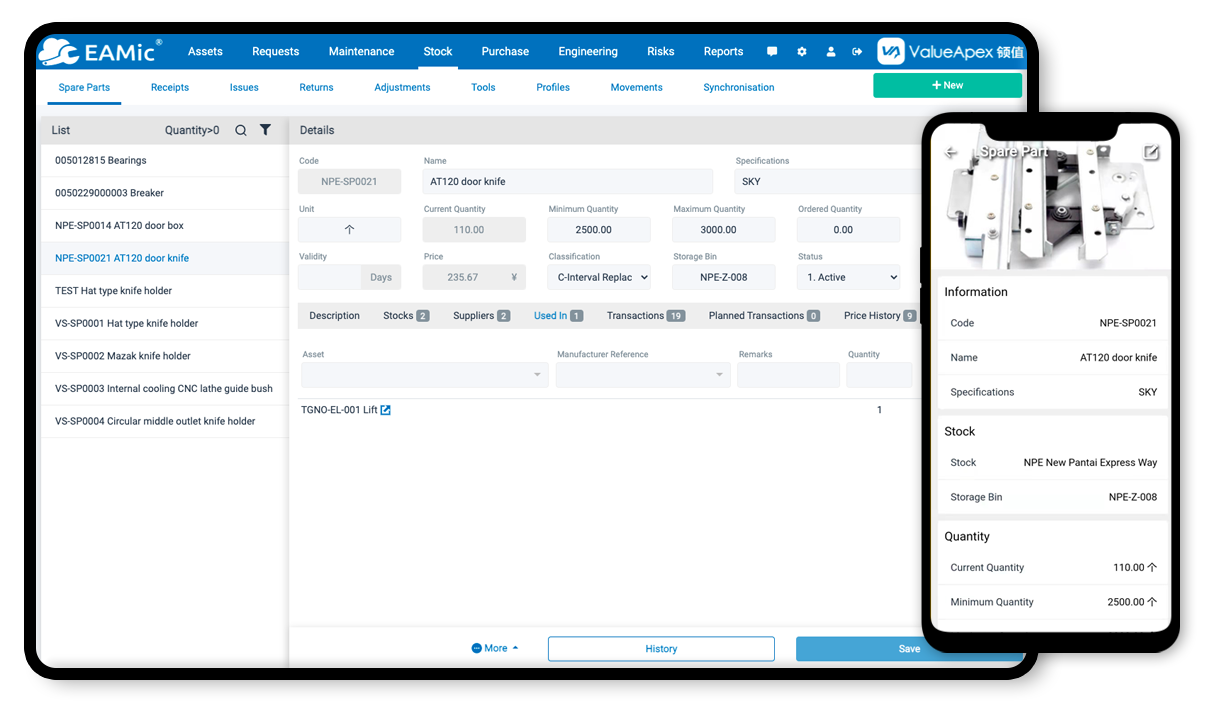
6. Spare Parts Inventory Management: Manages the spare parts, consumables, and tools required for maintenance. Functions include: spare parts master data management, inventory level setting, inbound/outbound/transfer operations, stocktaking, purchase requisitions, and supplier management. It can link with work orders, automatically deduct inventory, and generate procurement demands, optimizing inventory.
7. Human Resources and Skills Management: Establishes personnel records for the maintenance team, documenting their skills, qualifications, and training history. When assigning tasks, the system can automatically recommend engineers with the appropriate skills and qualifications based on the fault type, optimizing human resource allocation.
.png "functional-modules-of-an-equipment-02(1).png")
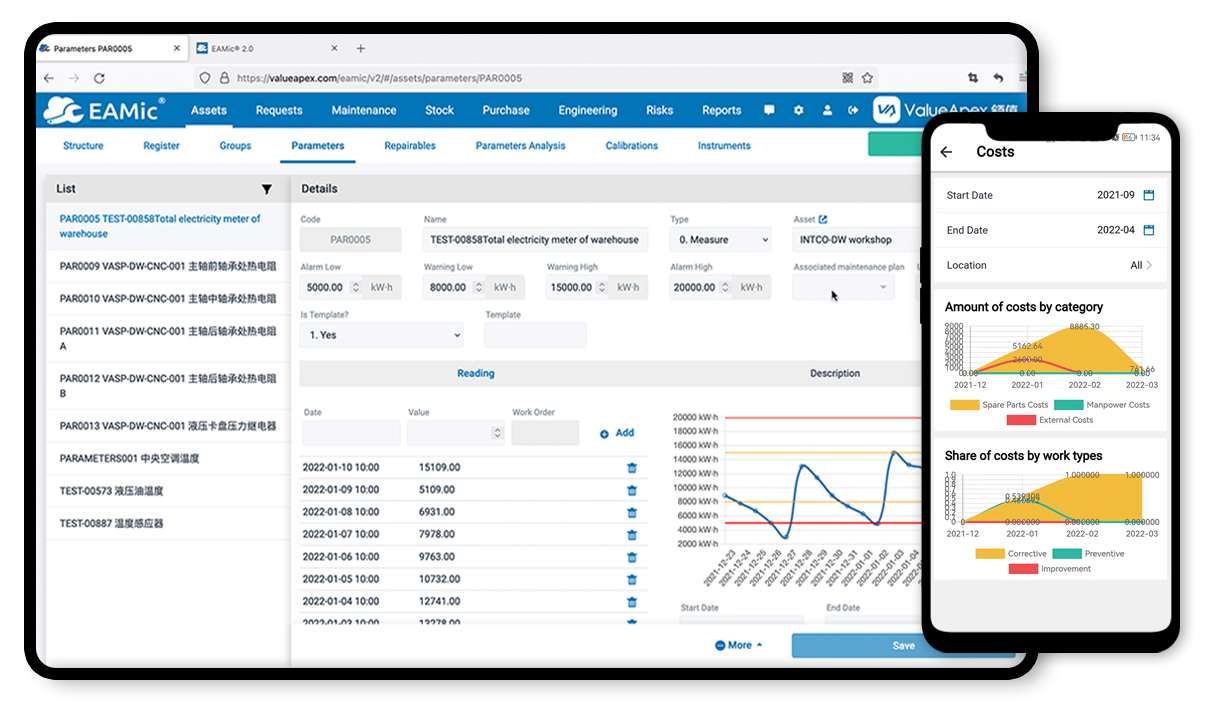
8. Reporting and Dashboards: The most critical value-output module of the system. It transforms all collected data into visual insights. It comes with pre-built standard reports and supports custom reports and real-time management dashboards, helping managers grasp operational performance immediately.
9. KPI Performance Management: Defines and tracks key performance indicators such as Equipment Availability, Mean Time To Repair, Mean Time Between Failures, Planned Maintenance Percentage, and maintenance budget adherence. These are used to measure team and equipment performance and drive continuous improvement.
10. Failure Analysis and Management: Records the root cause, symptom, and resolution for each failure through a standardized fault code system. Long-term accumulation forms a knowledge base used to analyze repetitive failures and defect trends, providing basis for technical modifications and procurement decisions.
11. Safety Management and Compliance: Manages equipment safety inspection plans, operating procedures, and permit-to-work systems, ensuring maintenance activities comply with Health, Safety, and Environmental regulations.
12. Integration Interfaces: A "must-have capability" for modern systems. Provides API interfaces for integration with third-party systems like ERP, MES, IoT platforms, and SCADA/DCS, breaking down information silos and enabling automated data flow.

An excellent equipment operations system acts like an untiring "chief butler." Through the collaborative work of the above functional modules, it brings order, data-driven insights, and transparent efficiency to otherwise fragmented and complex operations management. When selecting a system, companies should not merely pursue "large and comprehensive" solutions but should first focus on core modules like the Asset Register, Work Order Management, PM Planning, and Reporting & Analysis. Then, based on their evolving needs, they can gradually expand into mobility, advanced analytics, and integration functions, steadily progressing towards smart operations.