CN
CN EN
EN
 jp
jp  th
th 

Email
marketing@valueapex.com


Demo
What are you looking for?
Smart campuses represent the future form of urban development, with their core lying in the intelligent management of various facilities through digital means. The Equipment Management System, acting as the "operations hub" of the smart campus, manages various critical equipment from energy and security to environmental systems, its complexity and importance far exceeding that of a single factory.
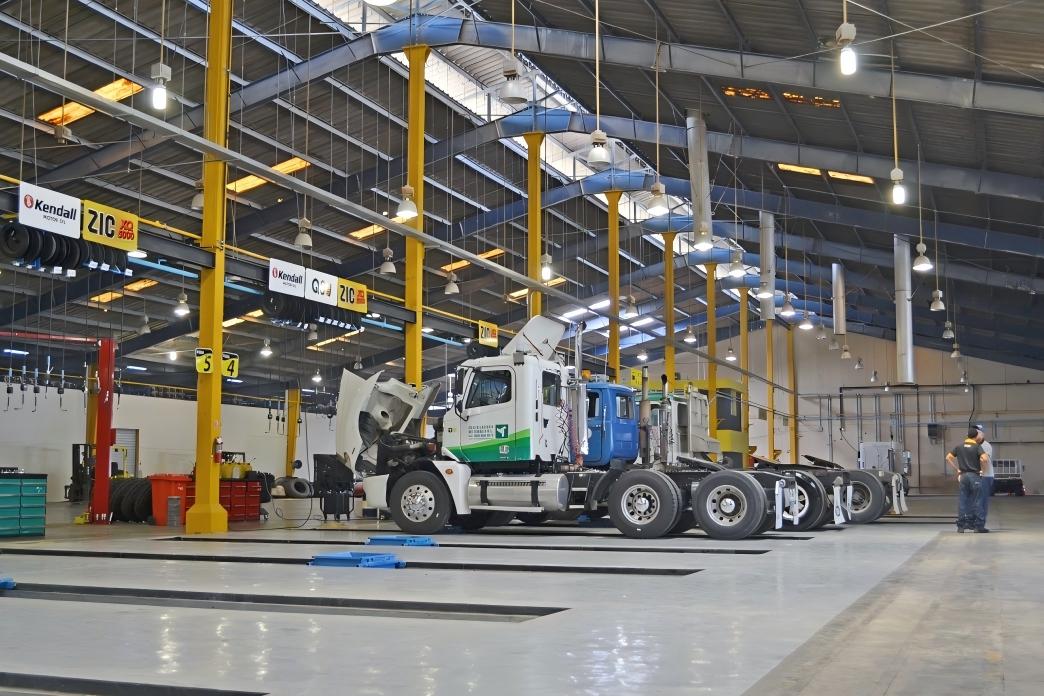
Diverse Equipment Types: Encompasses HVAC, elevators, power distribution, water supply/drainage, fire protection, access control, surveillance, lighting, data center infrastructure, etc.
Wide and Dispersed Distribution: Equipment is spread across various buildings, underground spaces, and public areas, with a large management radius.
High Standard Requirements: Extremely high demands for energy efficiency, environmental comfort, security assurance, and continuous operation.
Multiple System Silos: Equipment systems often operate independently, with disconnected data, making collaboration difficult.
1. Integrated Monitoring Center:
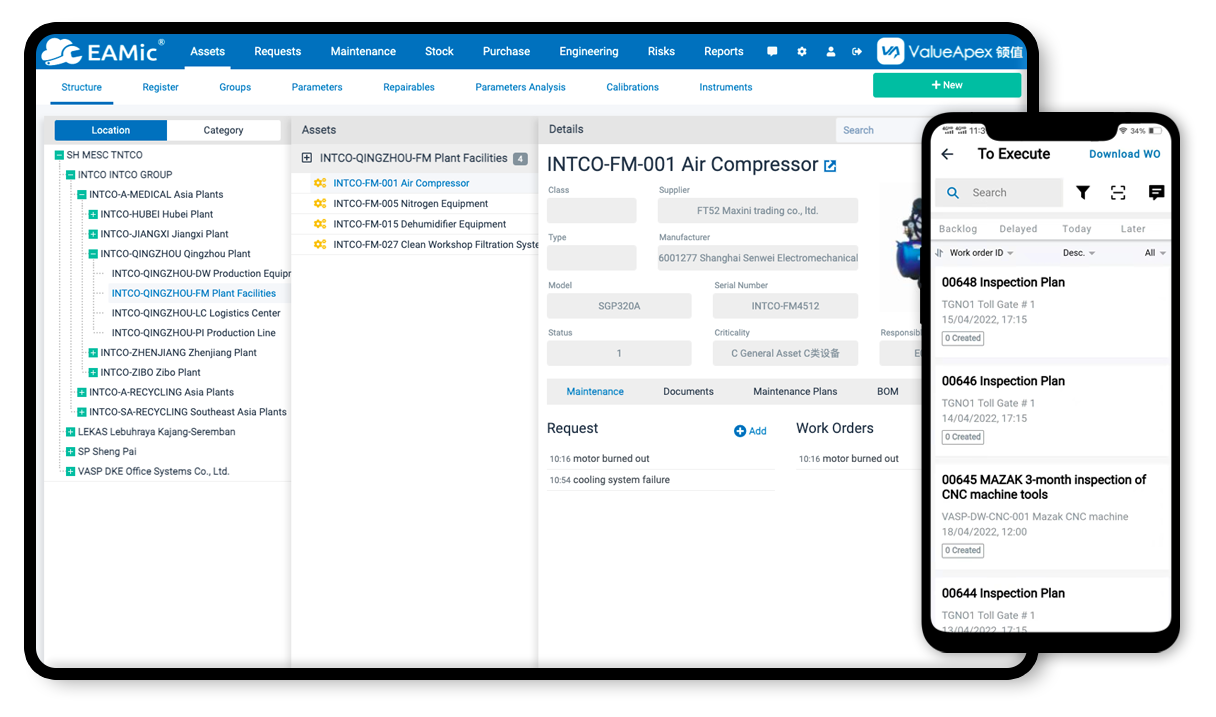
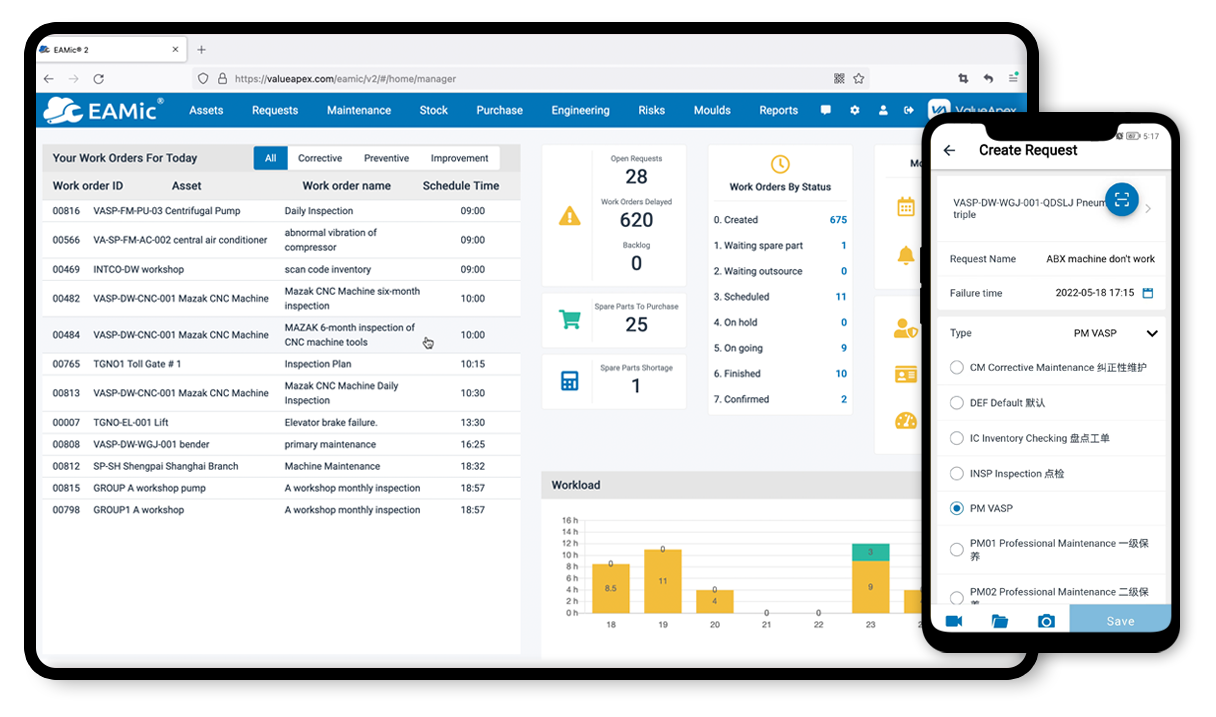
Unified Platform: Aggregates data from different subsystems onto a unified visual platform through integration interfaces, achieving global "single-pane-of-glass" management.
Real-Time Alarming: Provides real-time alerts for abnormal states in any system and pushes them to relevant responsible persons based on rules.
2. Energy Management (EMS):
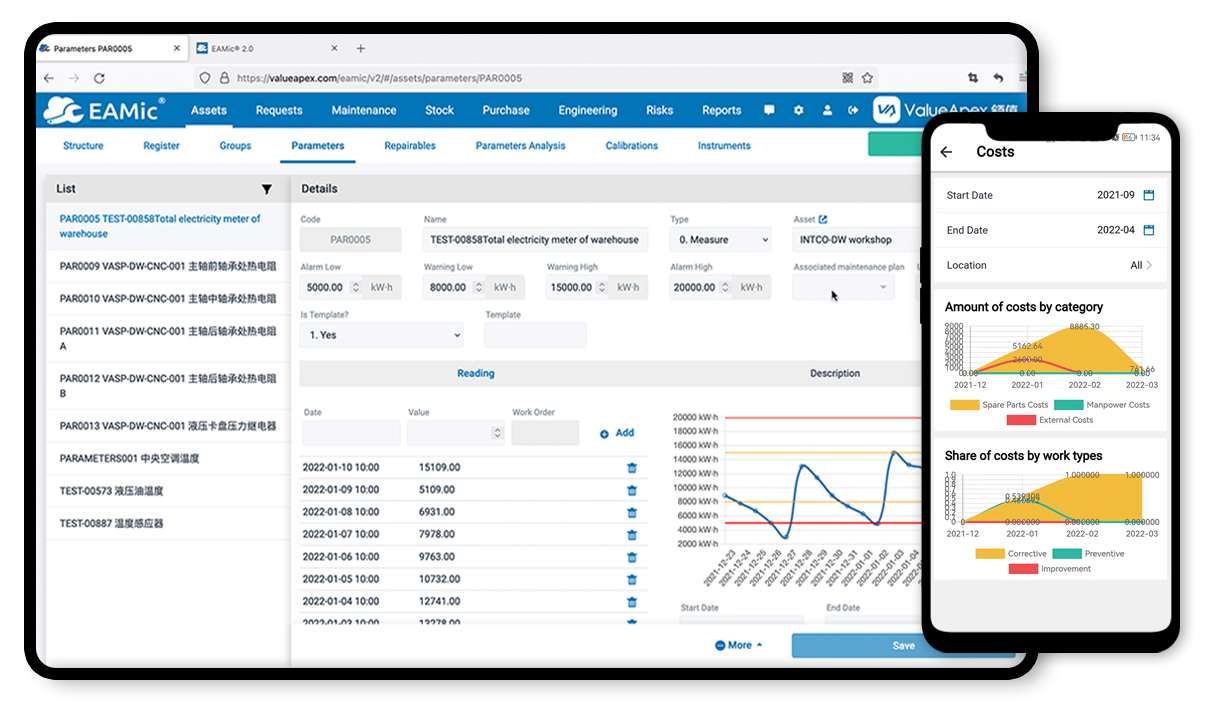
Energy Consumption Monitoring: Precise measurement and monitoring of water, electricity, gas, and heating/cooling consumption by item and zone.
Energy Efficiency Analysis: Identifies energy anomalies and uncovers savings potential through big data analysis, such as optimizing HVAC operation strategies and implementing lighting control.
Load Forecasting & Optimization: Predicts campus energy load, assists in load shifting, and reduces energy costs.
3. Preventive & Predictive Maintenance:
Planned Maintenance: Develops and automatically executes preventive maintenance plans for critical equipment like elevators, AHUs, and pumps.
Predictive Maintenance: Installs sensors on core mechanical/electrical equipment, predicts failures based on AI algorithms, shifting from "fix-on-fail" to "maintain-before-failure".
4. Space & Tenancy Association Management:
Asset Association: Links equipment to specific buildings, floors, and tenant units. Enables quick location of tenant-responsible equipment during service requests.
Cost Allocation: Accurately allocates equipment maintenance costs and energy consumption to different tenants or departments.
Improves Operational Efficiency: The integrated platform reduces staff travel and system switching, increasing work order processing efficiency by over 30%.
Reduces Operational Costs: Can lower energy and maintenance costs by 10%-20% through energy optimization and preventive maintenance.
Enhances Security Assurance: Real-time monitoring and intelligent linkage significantly improve the campus's ability to handle equipment failures and security incidents.
Improves User Experience: Stable equipment operation ensures a comfortable environment, and fast repair response increases tenant satisfaction.
Promotes Green & Low-Carbon: Fine-grained energy management is a key technical means for campuses to achieve "Dual Carbon" goals.

The Smart Campus Equipment Management System is no longer a simple repair tool but a comprehensive operations management platform integrating monitoring, control, analysis, and optimization. It is the core infrastructure for campuses to achieve cost reduction, efficiency gain, safety, controllability, and green intelligence. Investing in such a system has become an inevitable choice for modern campuses to maintain competitiveness.