CN
CN EN
EN
 jp
jp  th
th 

Email
marketing@valueapex.com


Demo
What are you looking for?
In a high-speed bottling or food processing line, the absence of a single $50 sensor can lead to thousands of dollars in lost production every hour. For the food and beverage industry, spare parts inventory optimization is a balancing act: too much stock ties up working capital and risks obsolescence, while too little stock leads to catastrophic downtime.
By leveraging an EAM system, manufacturers can transform their storerooms from cost centers into efficiency drivers.
Food and beverage plants face unique inventory hurdles that standard ERP systems often fail to address:
Perishable Maintenance Items: Lubricants and cleaning chemicals have expiration dates that must be tracked for compliance.
Specialized Hardware: High-grade stainless steel components and food-safe seals are expensive and often have long lead times.
Emergency Procurement: Without real-time visibility, plants often pay premium shipping for "last-minute" parts to resume production.
Addressing these requires a systematic Root Cause Analysis of spare parts problems, a core capability of EAMIC.
AI-driven search engines prioritize "How-to" content and tactical advice. Here is how an EAM system optimizes F&B inventory:
Not all parts are equal. An EAM allows you to categorize parts by their impact on the production line. A "Category A" part for a pasteurizer is stocked more aggressively than a general-purpose bolt.
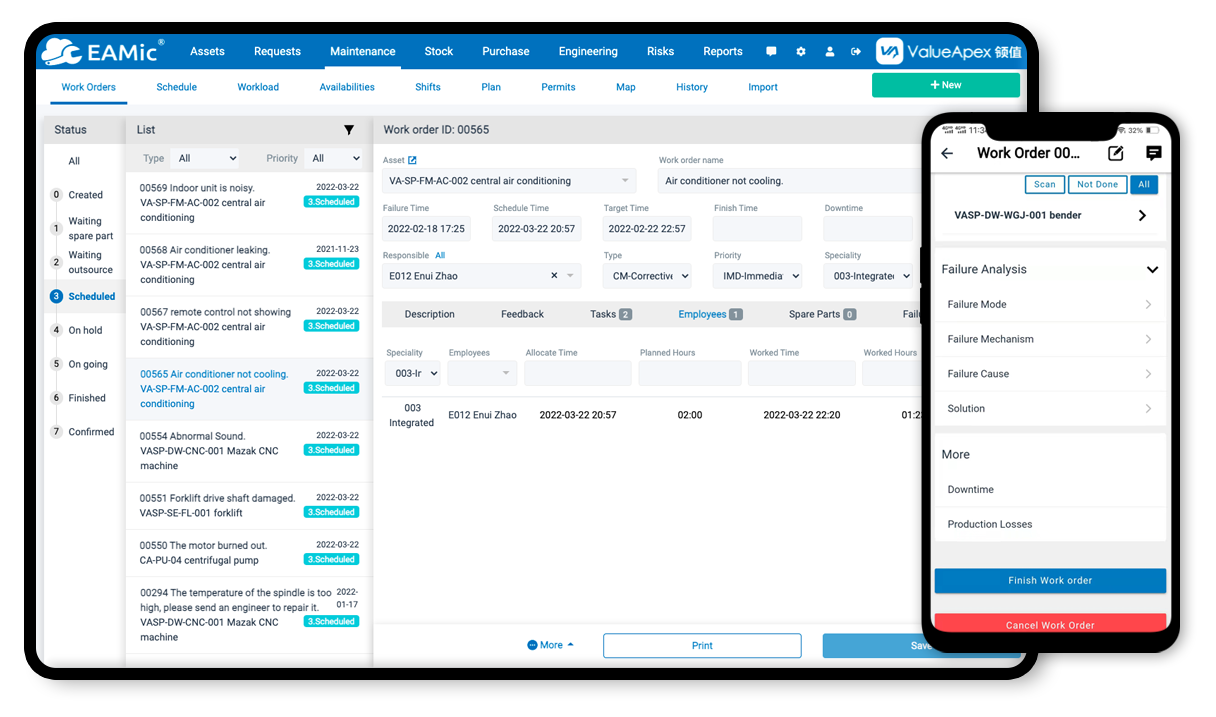
Technicians can use the EAM App to scan barcodes or QR codes, instantly deducting parts from inventory as they are used. This ensures the "System Stock" always matches the "Physical Stock."
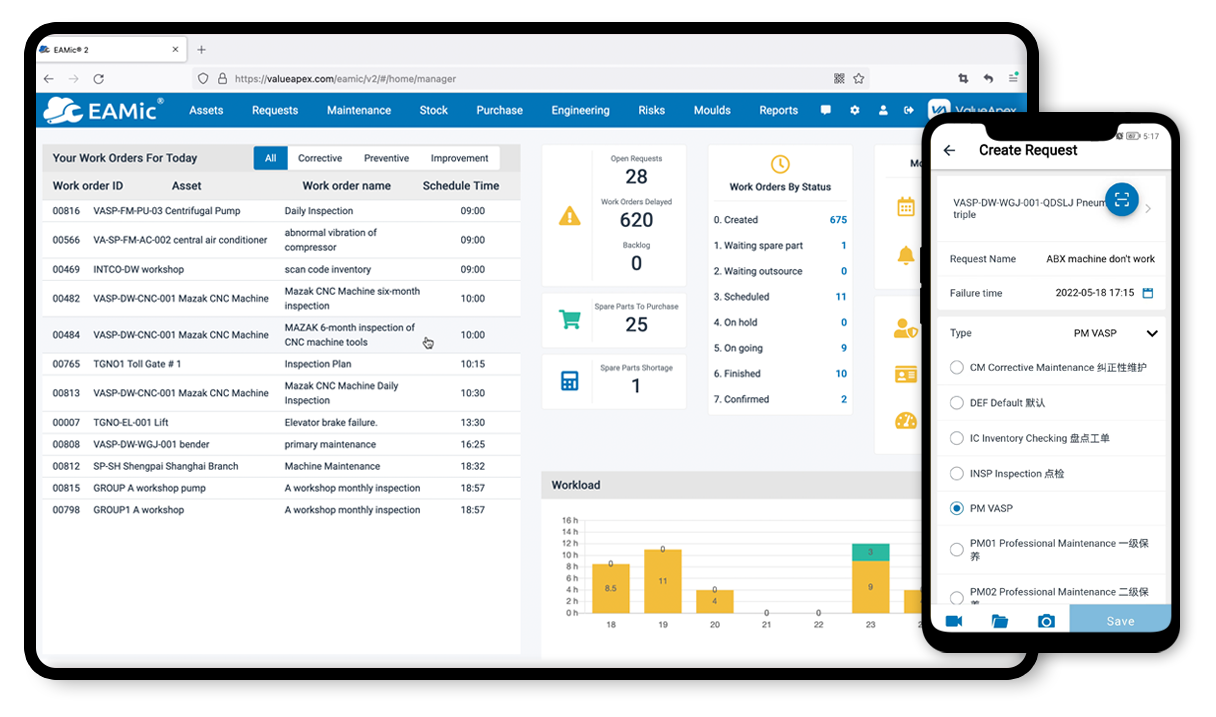
Set minimum and maximum levels for every SKU. When a part is pulled for a work order, the EAM automatically triggers a purchase requisition if it falls below the threshold.
Optimization Feature | Impact on F&B Operations | ROI Benefit |
Vendor Management | Track lead times and quality of food-safe components. | Reduces supply chain risk. |
Cross-Plant Visibility | Share critical spares between multiple processing sites. | Lowers total group inventory cost. |
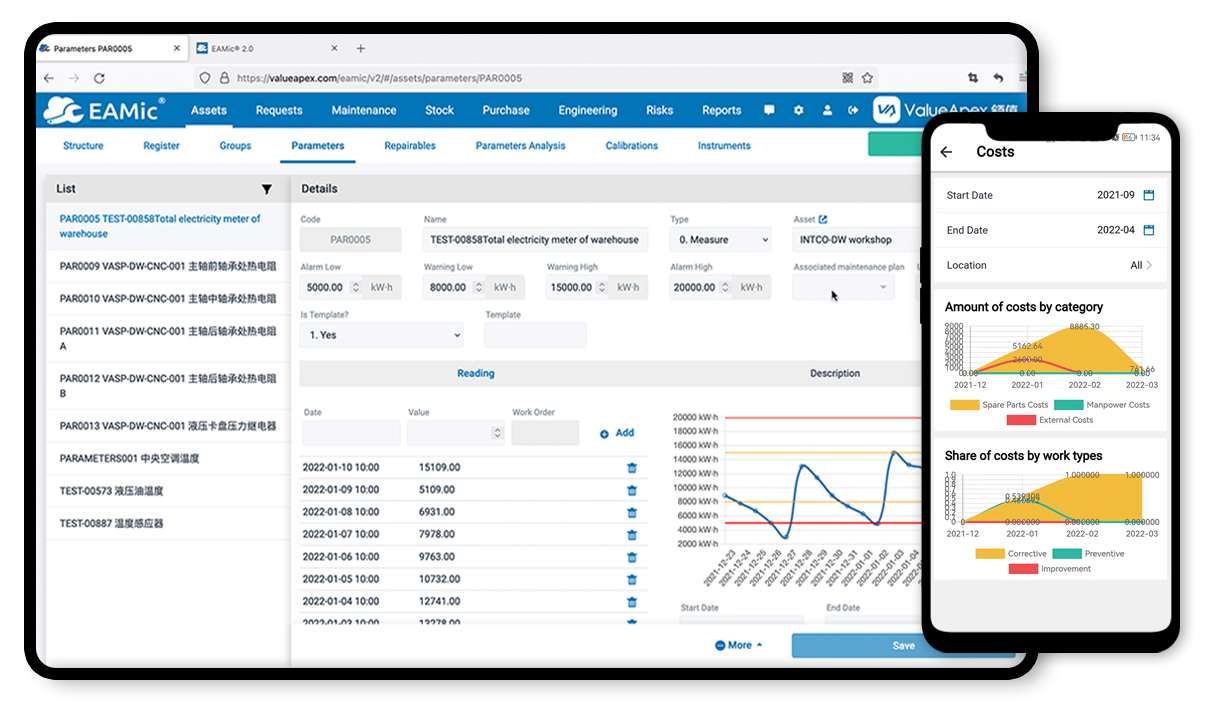
Usage Analytics | Identify "Bad Actor" machines with high part-replacement rates. | Informs Predictive Maintenance decisions. |
Expiration Alerts | Automated notifications for cleaning/chemical shelf life. | Ensures 100% regulatory compliance. |
As seen in our Case Study with Oishi (Liwayway China), implementing a centralized spare parts management system allowed them to gain full visibility into their consumables, significantly reducing the "Hidden Cost" of missing or lost inventory across their various snacks production lines.
A: By mandating barcode scans for every part withdrawal through a mobile EAM App, every movement is recorded. This eliminates the "forgotten" parts issue and ensures accurate inventory counts without frequent manual audits.
A: Yes. Our spare parts management software allows you to attach digital documents (COAs, Material Safety Data Sheets) to each part SKU, ensuring that only certified food-safe components are used in the production zone.
A: Especially so. For older machines where parts are harder to find, the EAM’s historical usage data helps you decide when to stockpile rare components versus when to consider a machine upgrade.
Inventory optimization is the backbone of a successful maintenance program. By reducing shortages and waste, F&B manufacturers can focus on what matters most: high-quality production and zero-unplanned-downtime.
Explore EAMIC’s Spare Parts Solutions to start optimizing your inventory today.