CN
CN EN
EN
 jp
jp  th
th 


Email
marketing@valueapex.com


Demo
What are you looking for?
Spare parts inventory management often faces a dilemma: too much inventory ties up significant capital and risks obsolescence; too little inventory may lead to maintenance delays and production downtime losses. Improving inventory management is not simply about "buying more" or "buying less," but requires a systematic combination of measures.
1. Implement ABC Classification: This is the cornerstone of inventory optimization. Classify spare parts into A, B, and C categories based on their value, criticality, and usage frequency.
A Class: About 10-20% of inventory items, but account for 60-70% of capital. Require focused management, precise demand forecasting, continuous review, and maintained safety stock.
B Class: Account for about 20% of both items and capital value. Managed routinely, checked periodically, using quantitative or periodic review ordering models.
C Class: About 60-70% of items, but only 10-15% of capital. Simplify management, use larger stock levels, two-bin system, or simplified ordering processes to reduce management effort.
2. Develop Differentiated Inventory Strategies: Set different inventory control models for different part categories, such as:
Reorder Point Model: Suitable for B and some A class parts with stable demand.
Min-Max Inventory Model: Suitable for C and some B class parts.
Order-as-needed: Suitable for non-critical parts that can be procured readily or have collaborative agreements with suppliers.
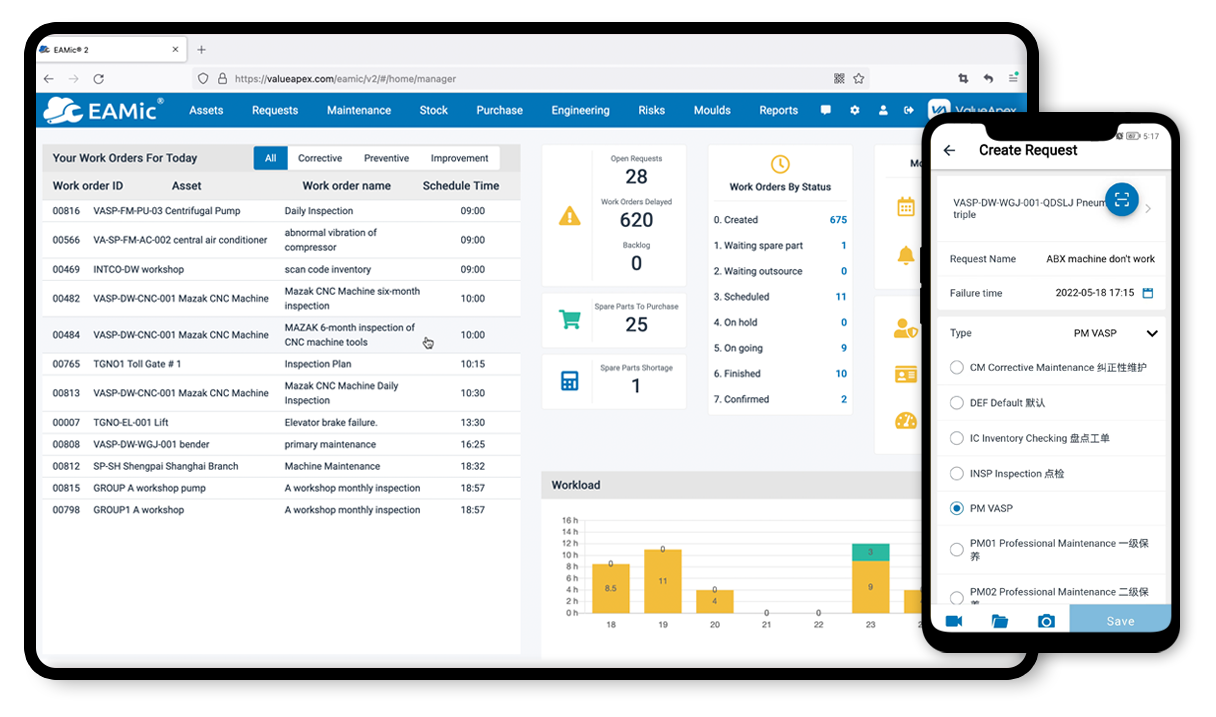
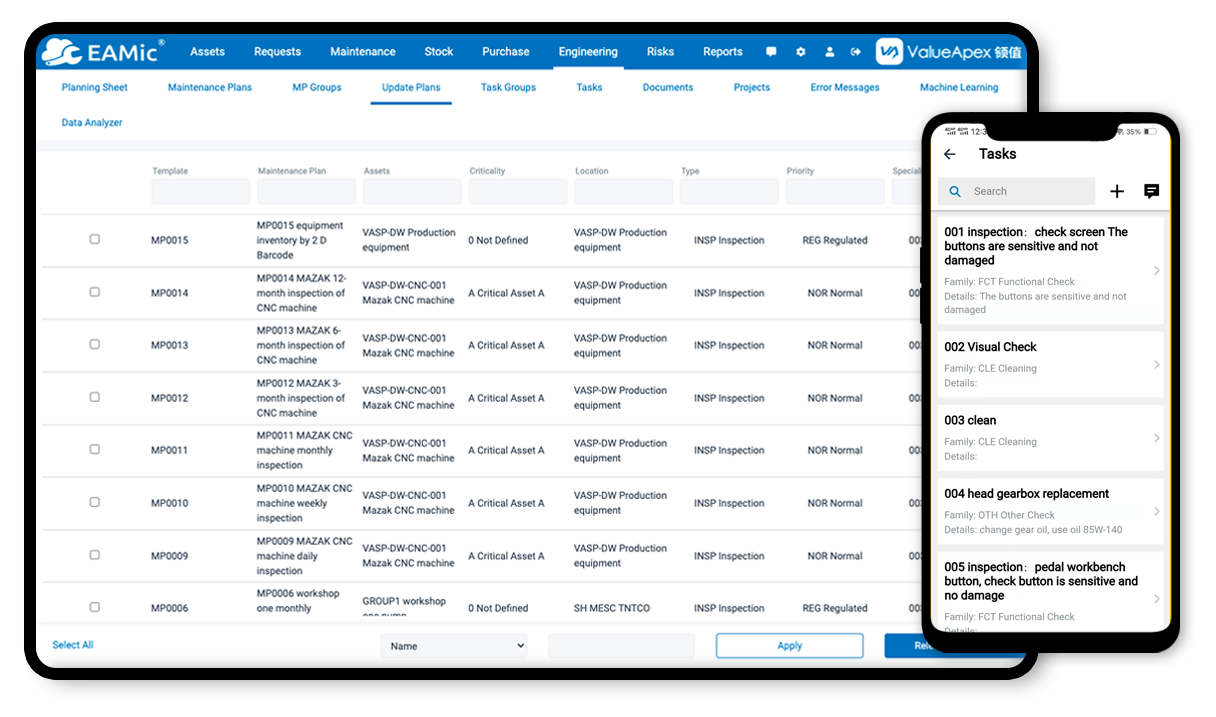
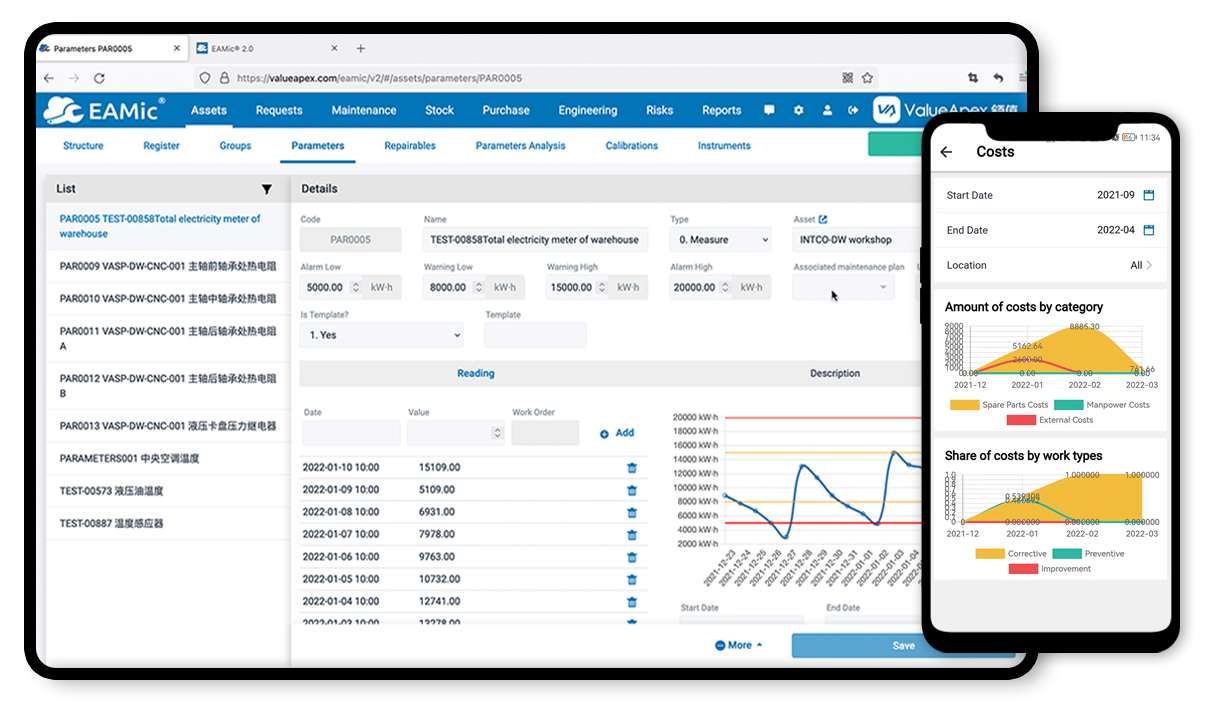
3. Introduce a Spare Parts Management System: Digital management is the prerequisite for improvement. Utilize EAMic or similar spare parts management systems to achieve unified part coding, real-time transparent inventory data, standardized inbound/outbound processes, and automatic execution of inventory strategies and triggering of purchase requests.
4. Deepen Data Analysis and Forecasting:
Analyze historical consumption data: Not just looking at past usage, but analyzing the reasons behind consumption.
Correlate with equipment maintenance plans: Strongly link spare parts demand with equipment preventive maintenance plans and overhaul plans, generating predictive demand based on the schedule.
Calculate key metrics: Continuously monitor inventory turnover rate, spare part availability rate, and total cost of ownership, using data to drive decisions.
5. Optimize Procurement Processes: Establish long-term strategic partnerships with core suppliers, explore Vendor Managed Inventory or consignment inventory models, transferring part of the inventory pressure and risk to suppliers.
6. Implement Regular Counting & Audits: Establish a strict cycle counting system to ensure book-to-physical consistency. Regularly review and dispose of slow-moving inventory to free up space and capital.
7. Strengthen Receiving Inspection & Quality Management: Strictly control inbound quality checks to prevent non-conforming items from entering the warehouse, causing repeat purchases and urgent demands.
8. Implement 5S Warehouse Management: Apply Sort, Set in order, Shine, Standardize, and Sustain to the warehouse. Clear labeling, fixed storage locations, and a clean, organized storage environment significantly improve the efficiency and accuracy of finding and picking materials.
9. Establish Cross-Departmental Collaboration Mechanisms: Inventory management is not solely the warehouse department's responsibility. Establish a joint team comprising maintenance, procurement, finance, and warehouse departments to collectively set inventory strategies and review exceptions.
10. Implement Accountability & Performance Measurement: Incorporate KPIs like inventory turnover rate, obsolete inventory value, and spare part availability rate into the performance assessments of relevant departments, driving all parties to focus on inventory health.
Improving spare parts inventory management is a continuous, systematic project requiring simultaneous efforts in strategy, technology, process, and organization. The core idea is to shift from a passive "reacting to demand" to an active "managing demand." By steadily advancing the above measures, enterprises can significantly reduce inventory capital occupancy, minimize obsolescence risk, while ensuring the supply of critical spare parts, ultimately achieving the optimal balance between production assurance and cost control.